Yaebeni-Shidare Double-Petaled Weeping Cherry Trees
Meiji period
This article can be read in about 2 minutes.
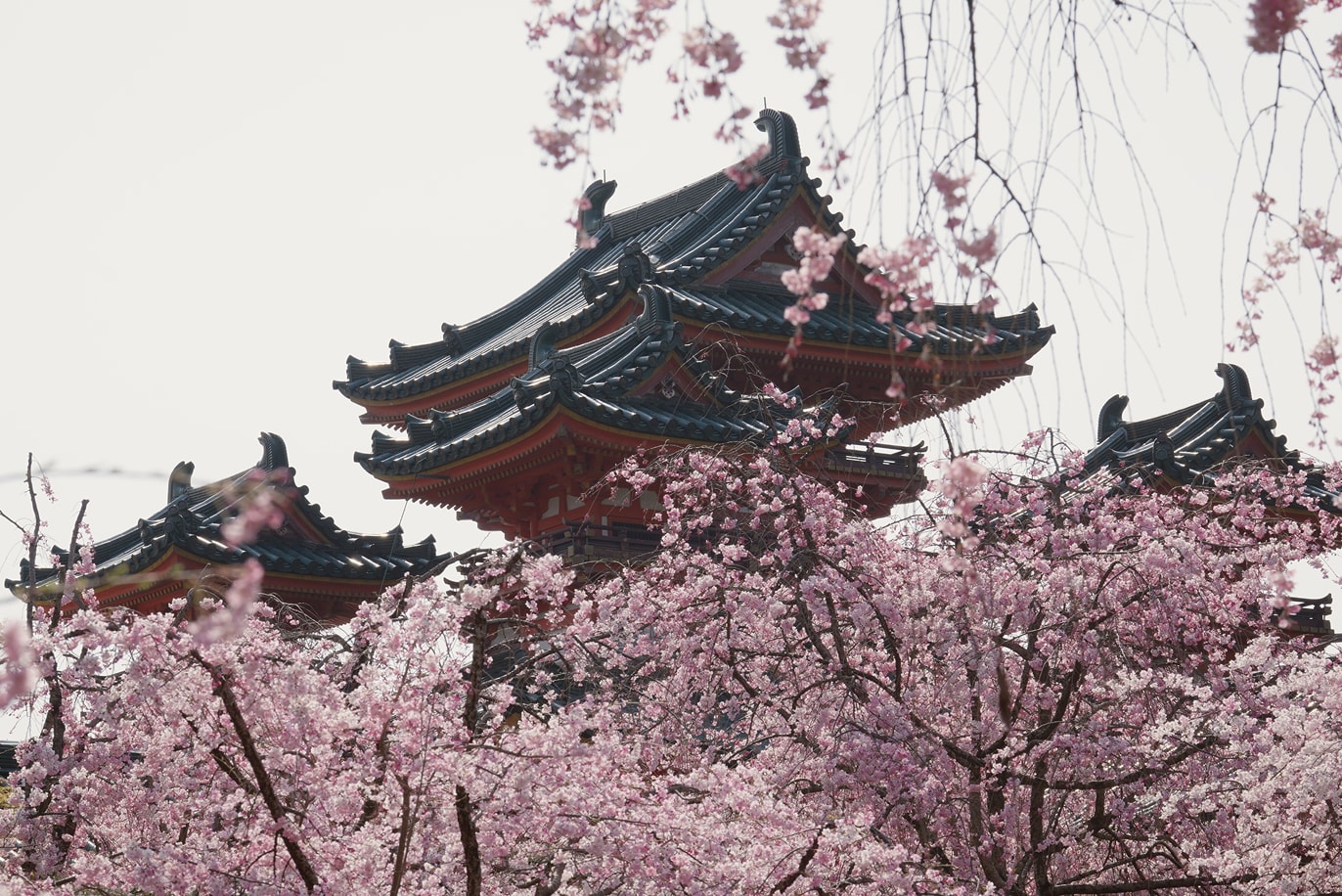
The memory of the weeping cherry tree
blooming again in Kyoto
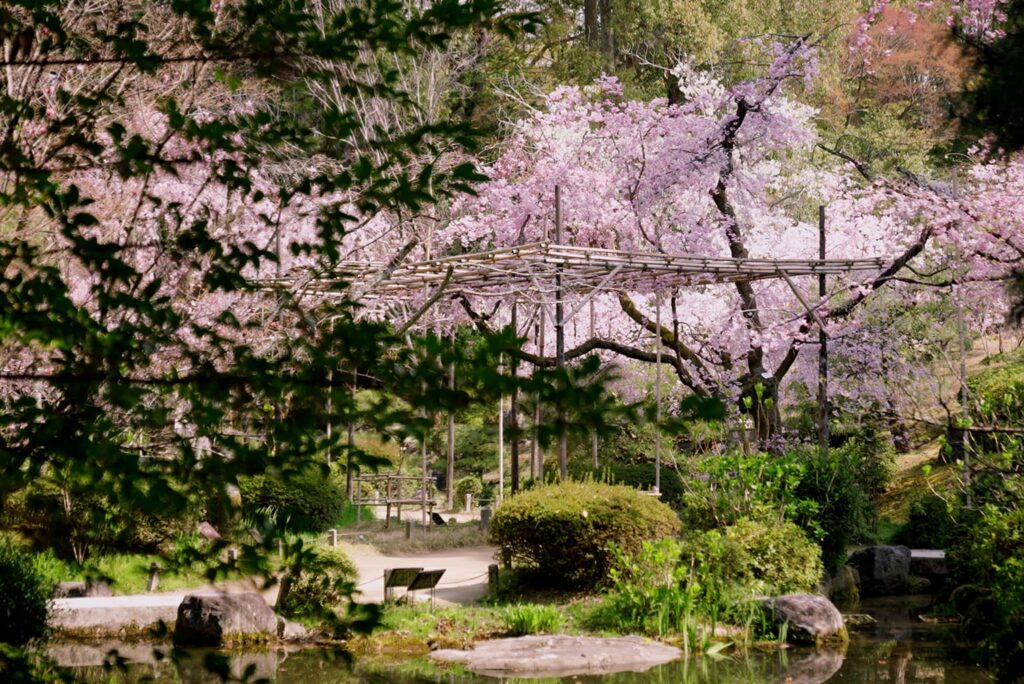
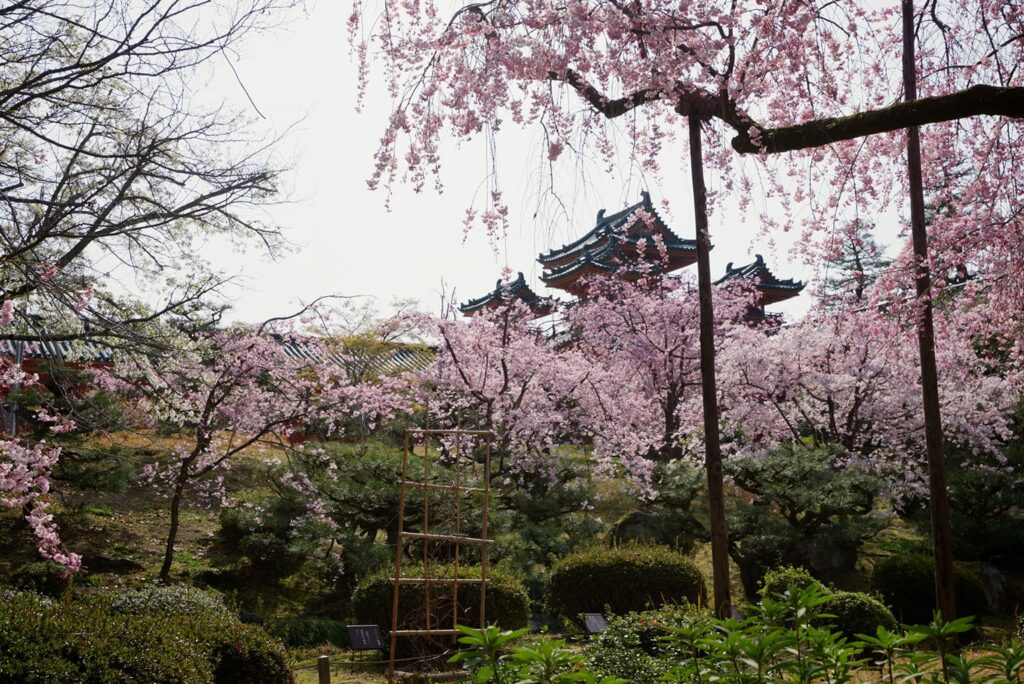
These cherry trees were presented to Heian Jingu Shrine by Sendai’s first mayor, Endo Yoji (1849–1918) in 1895, the year of the shrine’s construction. The trees are also known by the name sato-gaeri-zakura, which roughly translates to “cherry trees coming home.” The name is a reference to their long journey across Japan; during the Edo period (1603–1867), the lord of Tsugaru domain (now western Aomori Prefecture) took a number of ito-zakura cherry trees from the aristocratic Konoe family’s historic garden in Kyoto to plant in his northern domain. The trees finally “came home” to Kyoto when they were returned in the Meiji period (1868–1912).
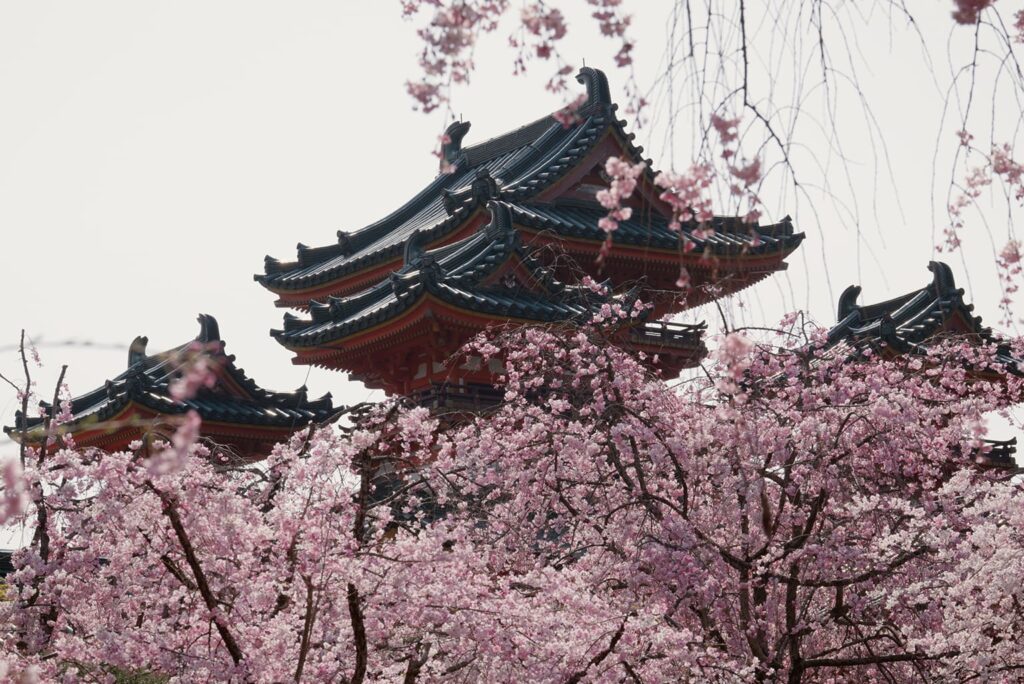
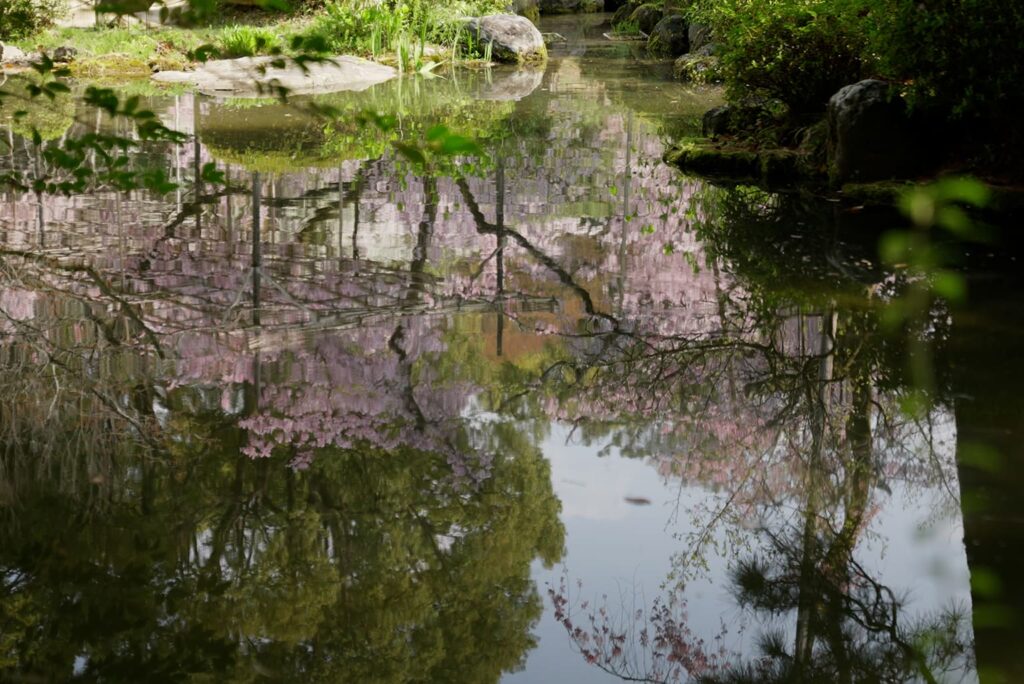
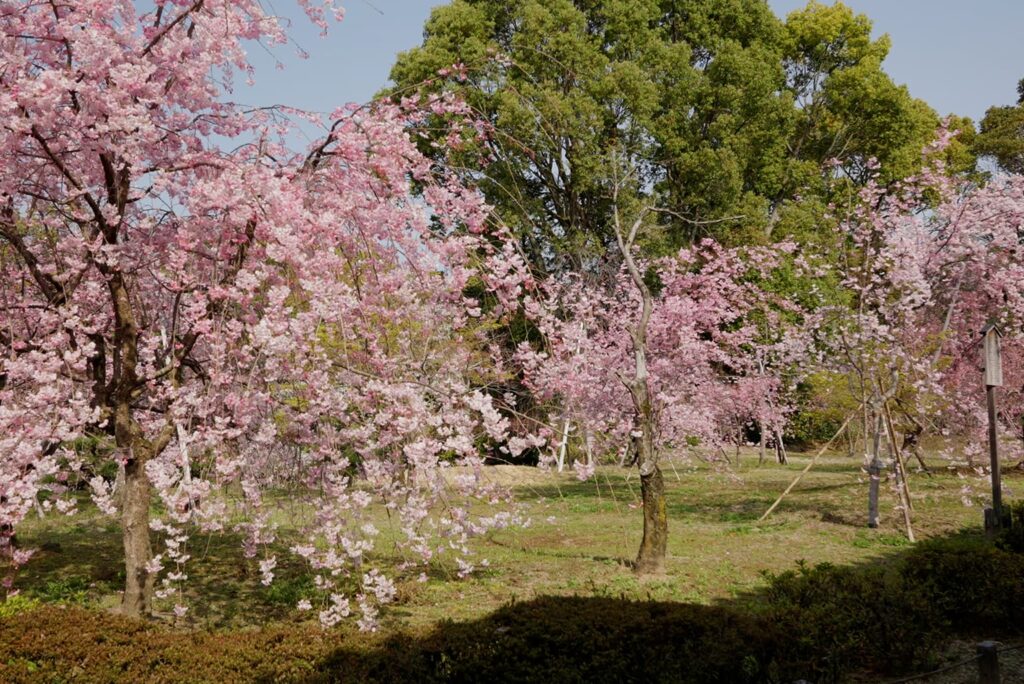
These cherry trees appear in the novel The Makioka Sisters by the renowned author Tanizaki Junichiro (1886–1965) and are a particularly popular symbol that spring has come to Kyoto.
Meiji period
This era began when the shogunate fell and power was restored to the emperor. It refers to the 45-year period stretching from the Meiji Restoration in 1868 to the death of Emperor Meiji in 1912.
Tanizaki Junichiro
Tanizaki Junichiro (1886–1965) was a Japanese novelist and essayist active from the end of the Meiji period (1868–1912) to the mid-Showa period (1926–1989). He wrote several masterpieces, such as the novels Chijin no ai (Naomi) and Sasameyuki (The Makioka Sisters), and the essay Inei raisan (In Praise of Shadows). The motifs of his works often centered on aestheticism and Japanese ideals of beauty. He left a lasting imprint on modern Japanese literature.
Konoe Family
This is the first of the five houses descended directly from the Fujiwara Hokke family. Established at the end of the Heian period (794–1185), the family enjoyed high status, with many of its members serving as imperial regents. Beginning in the Meiji period (1868–1912), the family became a duchy and were instrumental in the preservation of traditional Japanese culture.
MOVIE
Experience the video to get one step closer.
This video, accompanied by narration, introduces the charms of <em>Yaebeni-Shidare</em> Double-Petaled Weeping Cherry Trees
. Experience its charms even more deeply through the video.
Duration: (audio included)
Share on Social Media


Please respond to our questionnaire.
Estimated length: 30 seconds