Middle Garden (Naka Shin’en)
Meiji period
This article can be read in about 2 minutes.
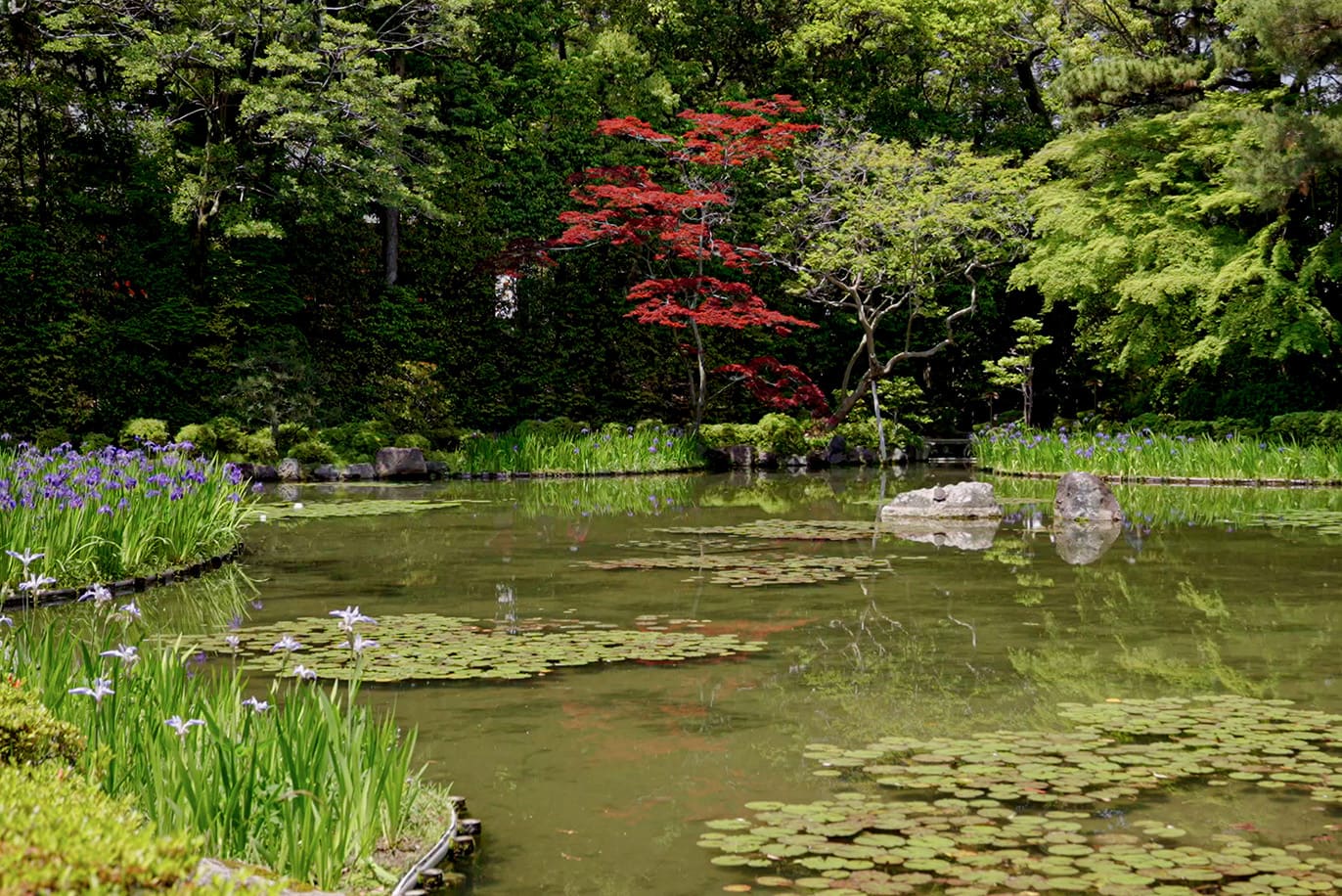
A poem for the pond
woven by an old bridge and blooming flowers
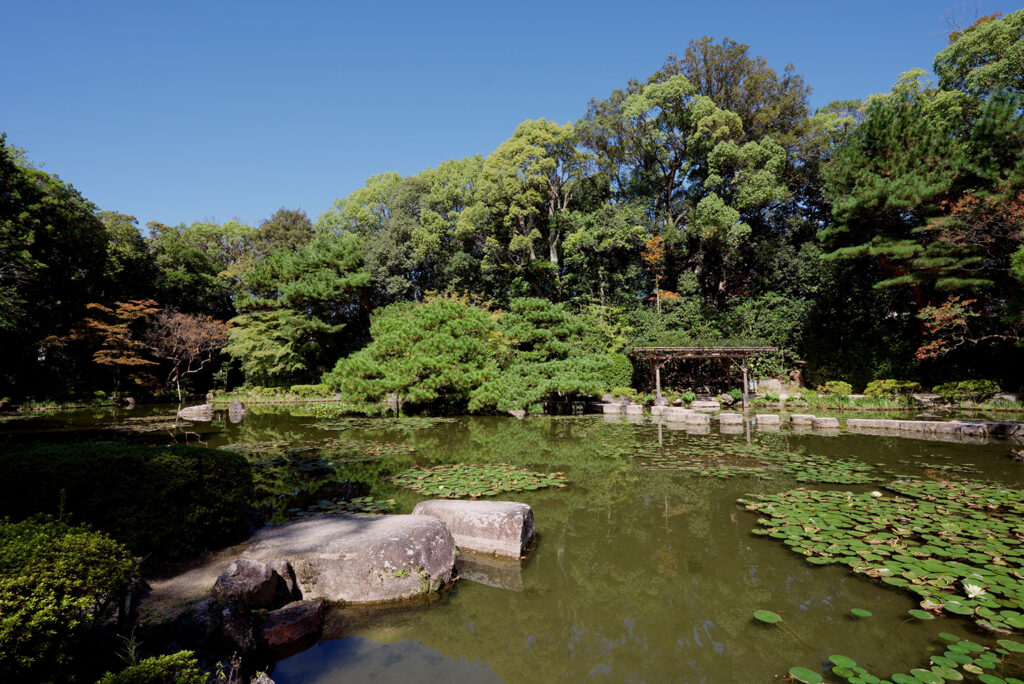
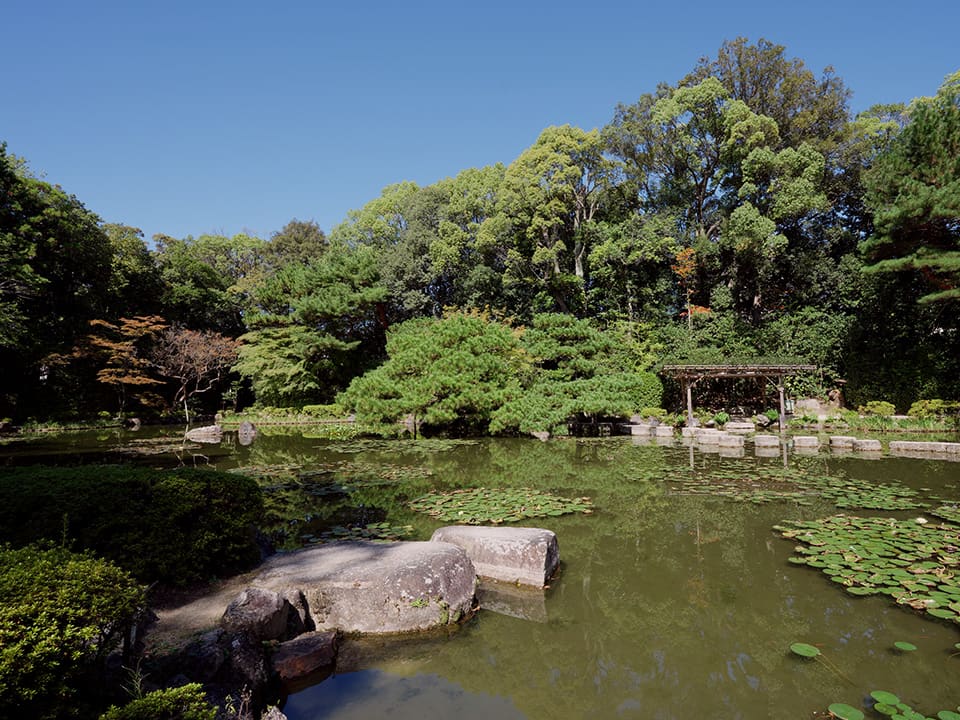
The Middle Garden, or Naka Shin’en, is one of the original gardens opened to the public with the shrine in 1895. It was landscaped by Ogawa Jihei VII, a master gardener of the Meiji era (1868–1912), known for his skillful use of rocks and water. It is a pond garden, slightly larger and more open than the West Garden (Nishi Shin’en), which he also created for the shrine’s opening.
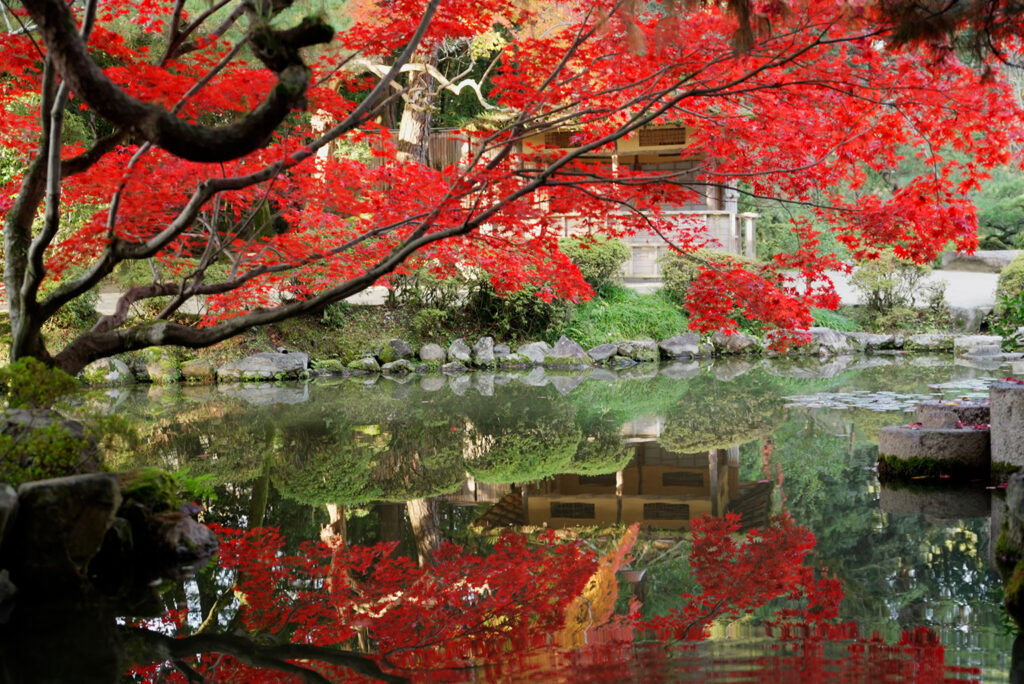
The Middle Garden is inspired by the Muromachi period (1336–1573). In this period, Zen Buddhism flourished, and exerted a strong influence on the development of Noh drama, the tea ceremony, landscape gardening, and flower arranging.
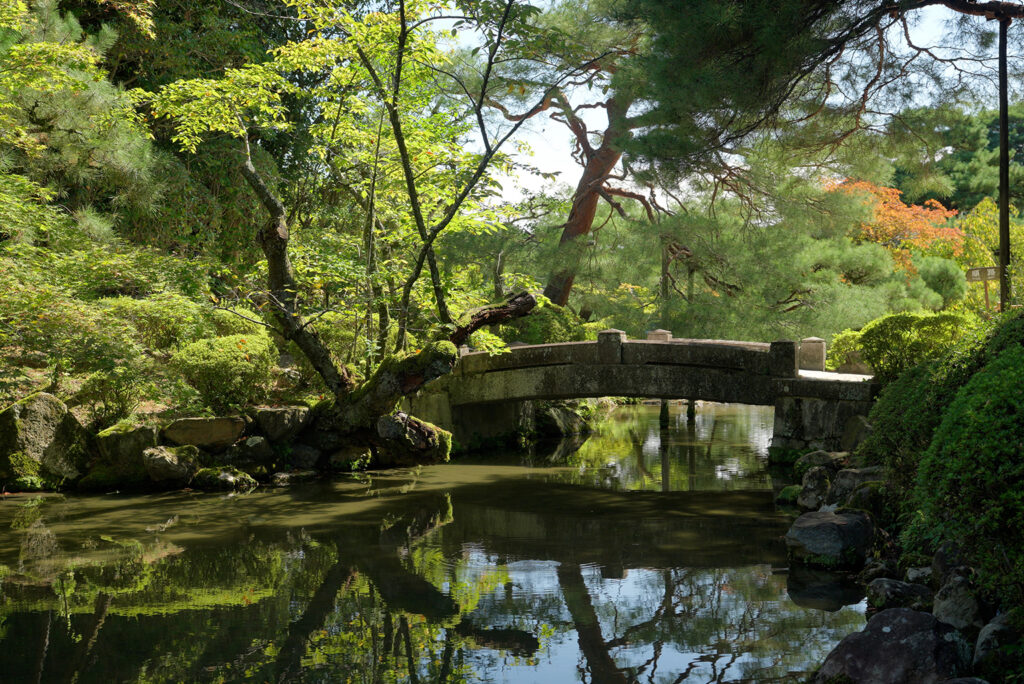
The garden is airy and open, and a hut along the path serves tea. The garden embodies the wabi-sabi aesthetic, the simple beauty found in imperfection and impermanence that is valued in tea ceremony and other traditional arts.
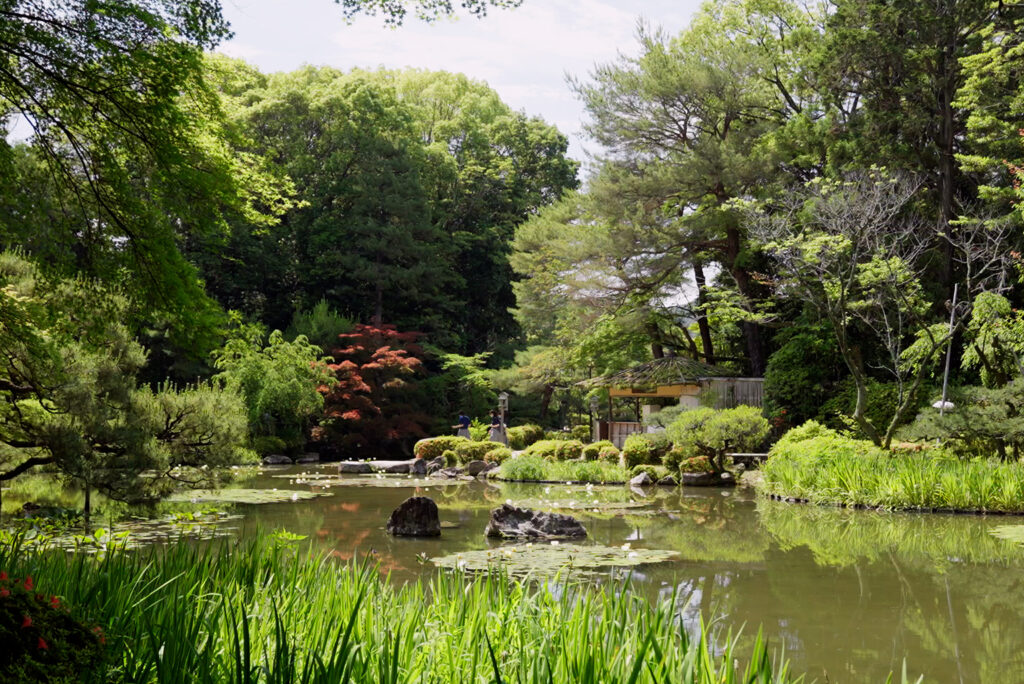
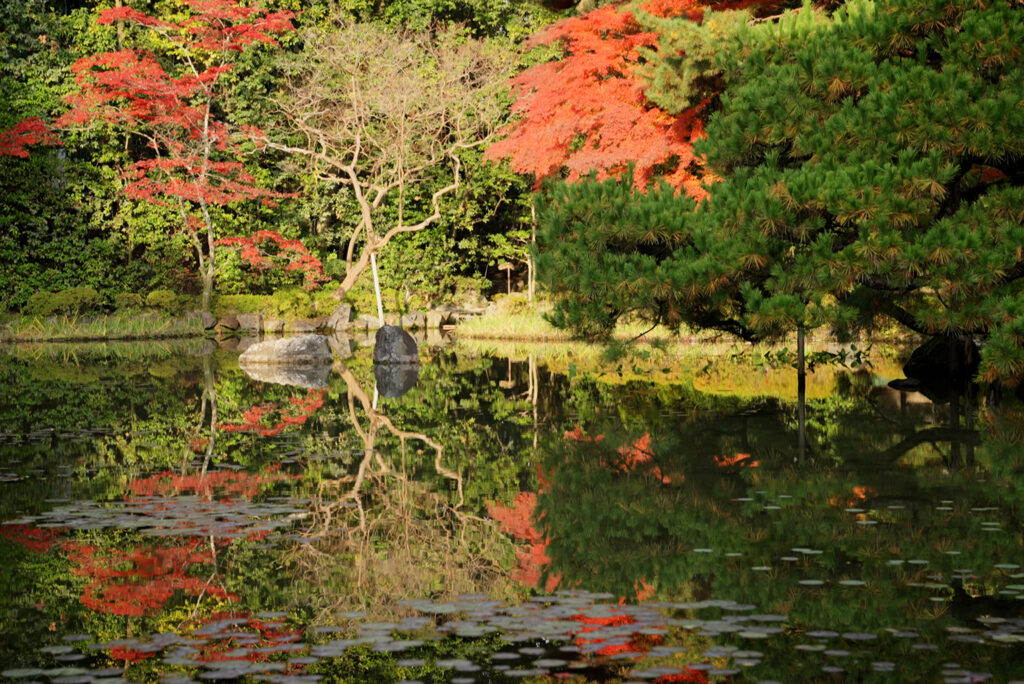
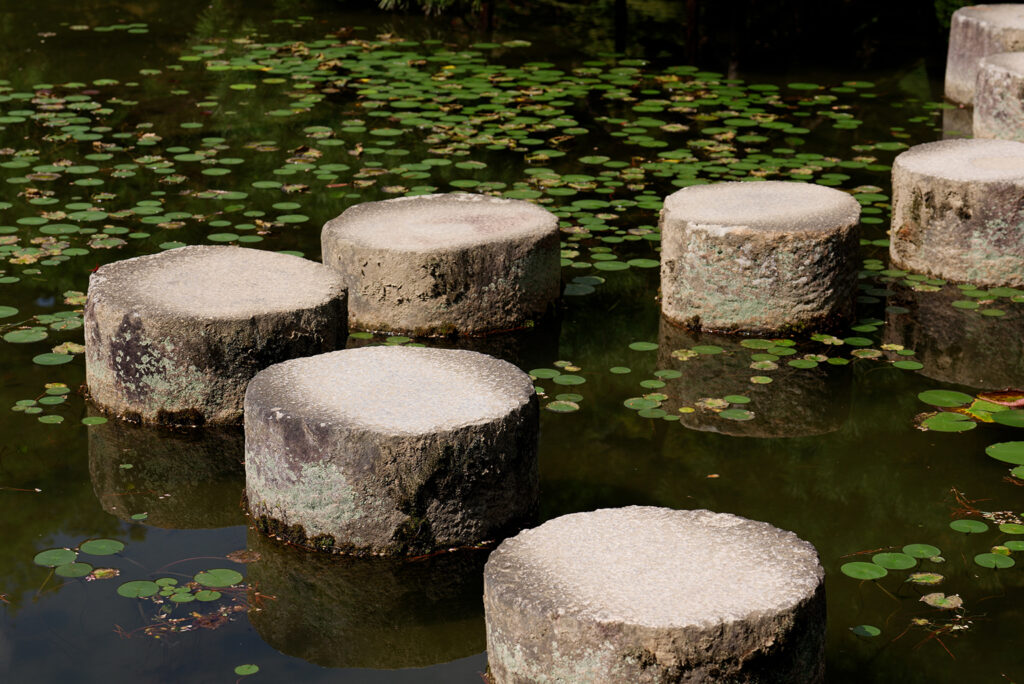
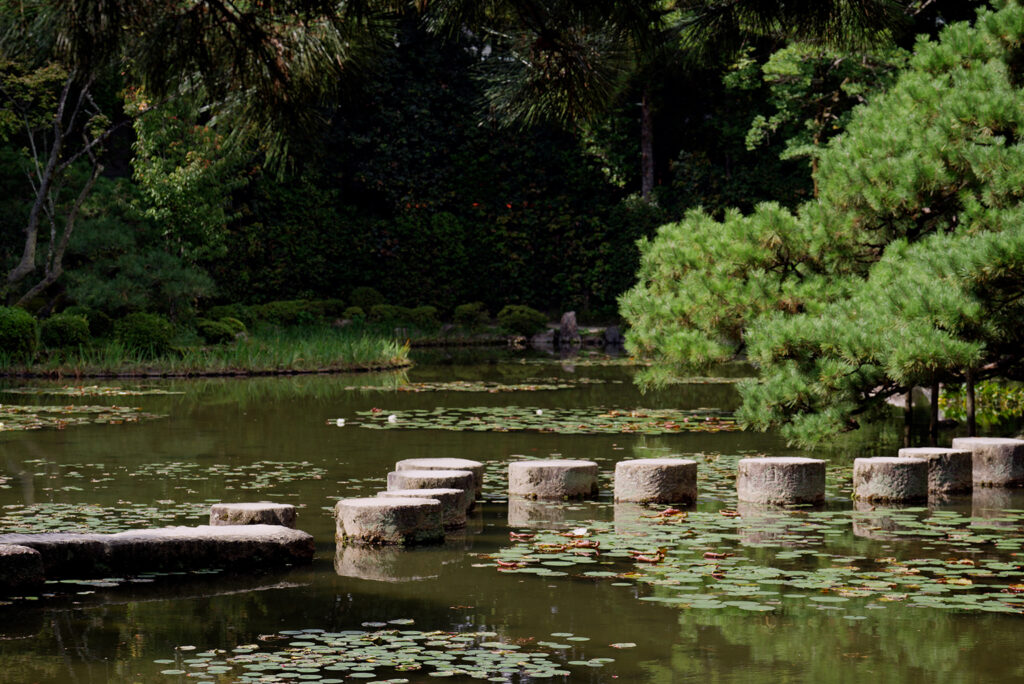
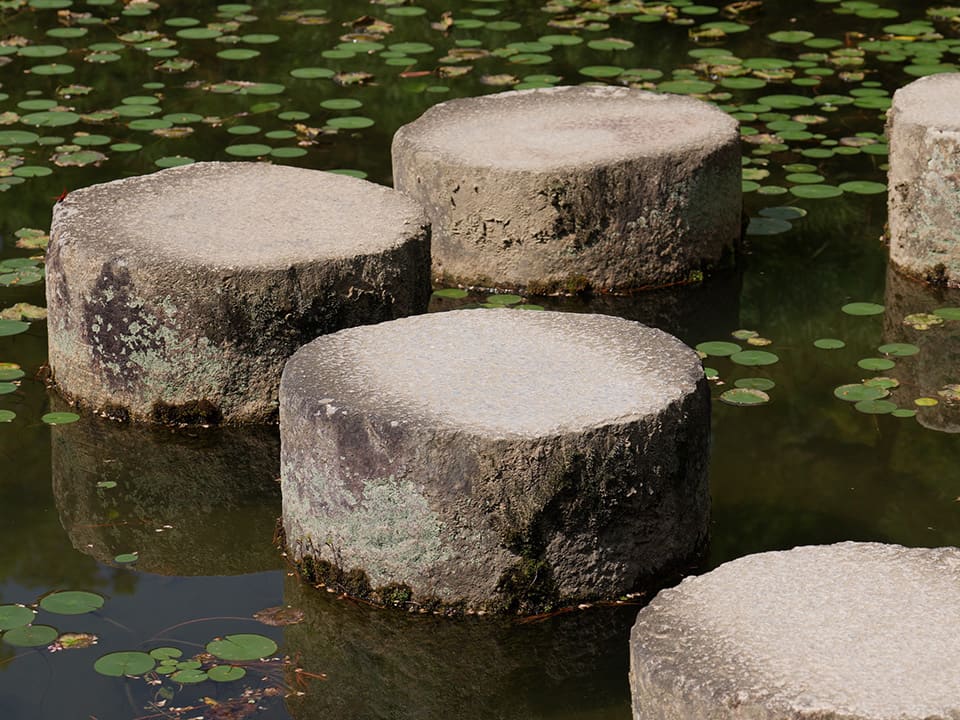
Stepping-stones traverse the pond and are an entertaining feature of the garden that allows for views from the water and from varying angles. The stones differ in height, shape, and size, and follow a playful winding path.
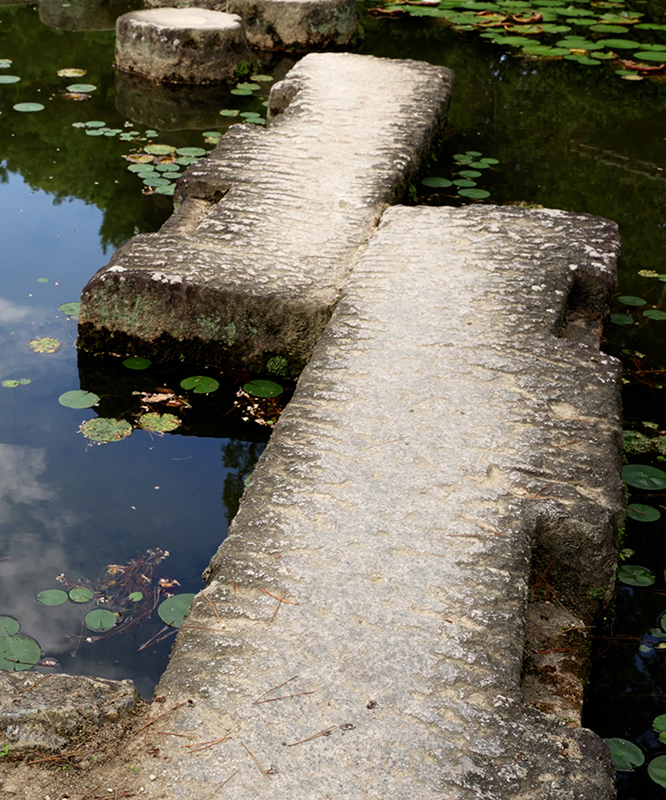
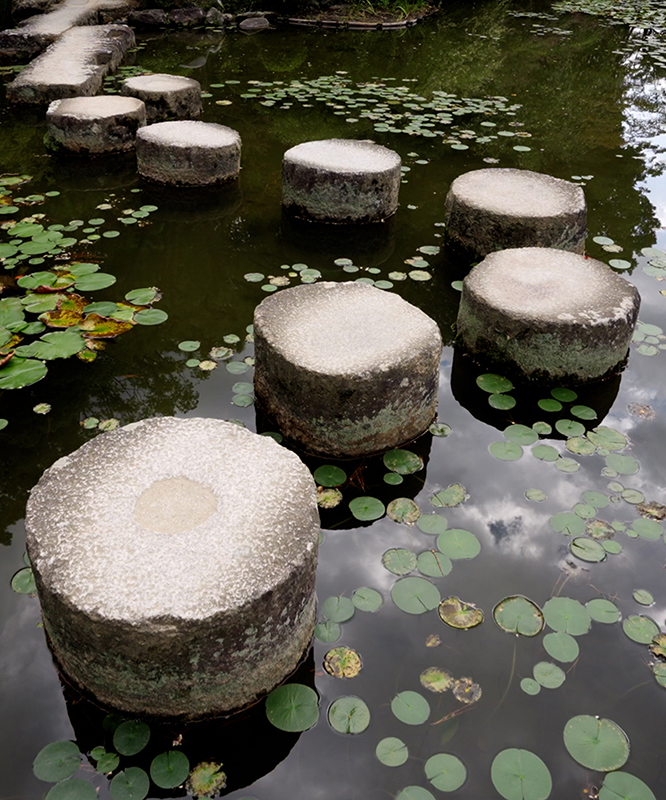
The pond, Soryu-ike, shares its name with the tower on the eastern side of the shrine courtyard, Soryuro Tower. Both are named after the Azure Dragon of the East, one of the celestial guardians in ancient Chinese geomancy.
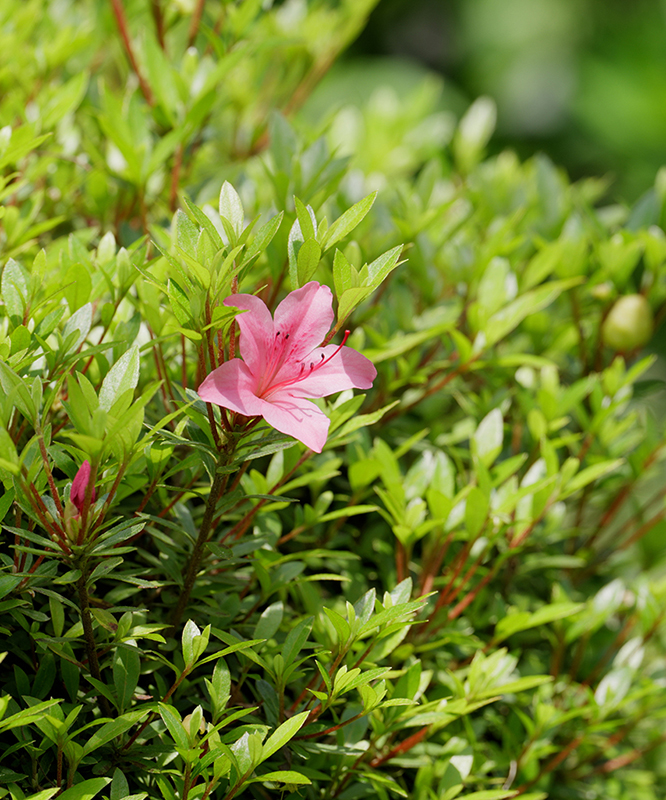
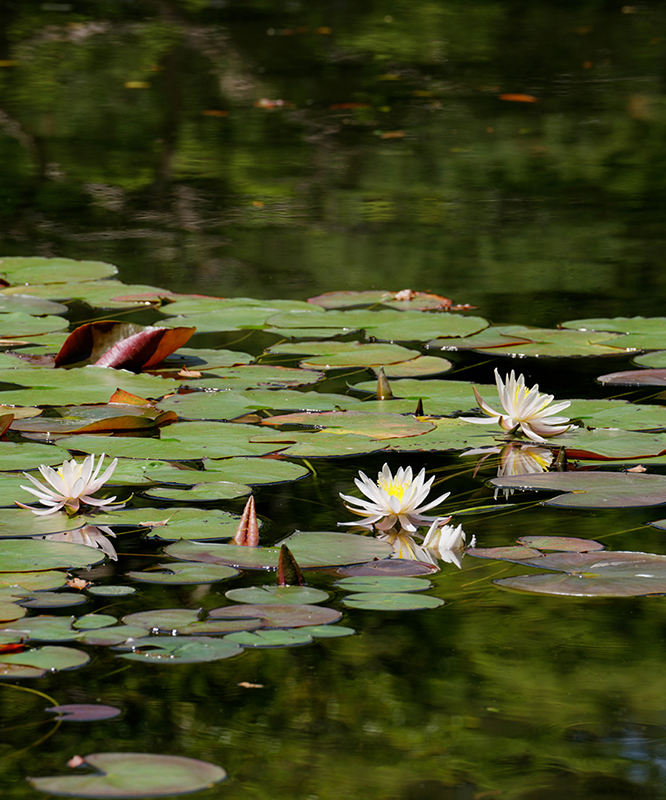
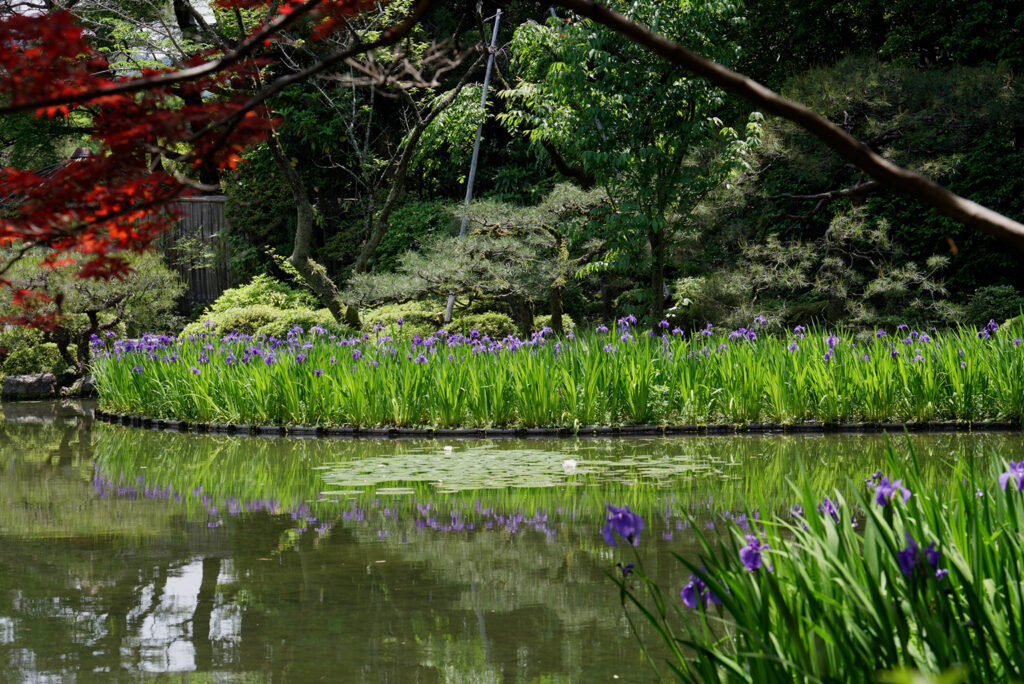
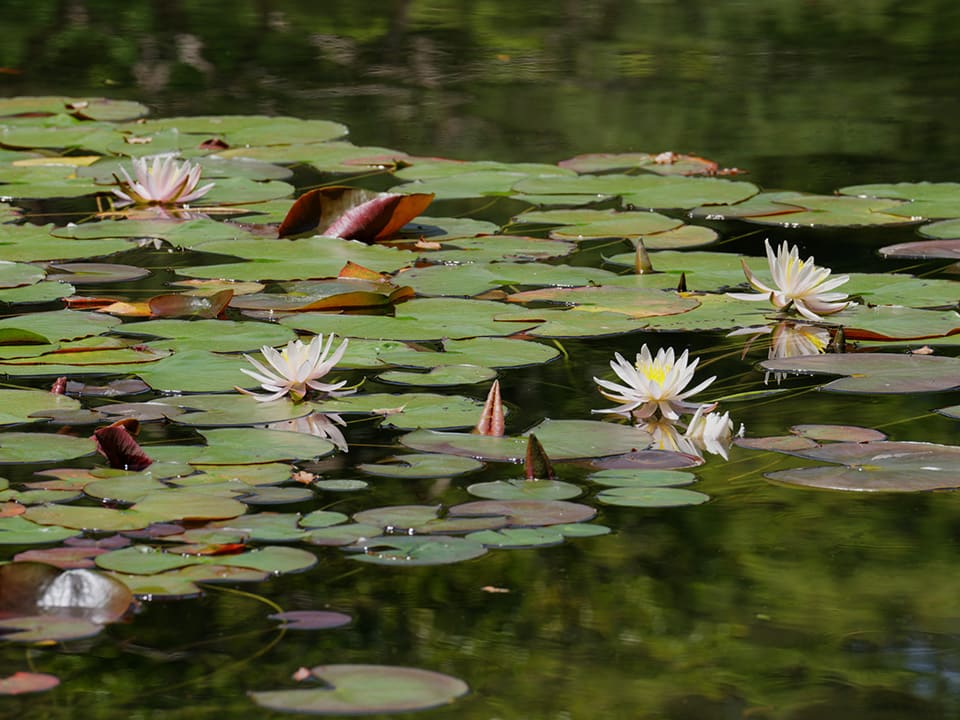
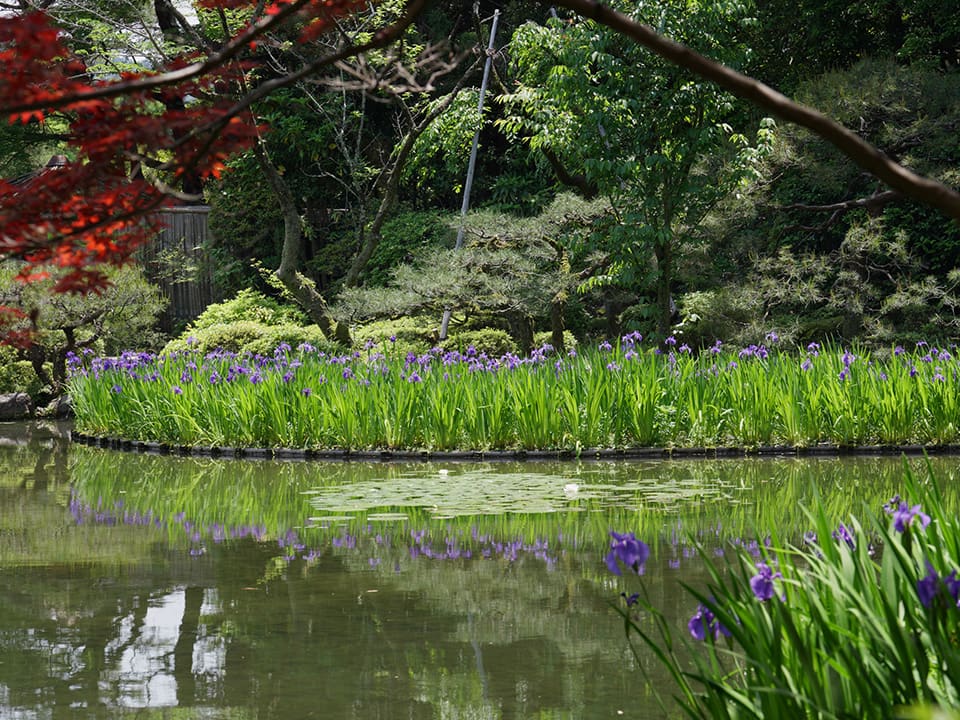
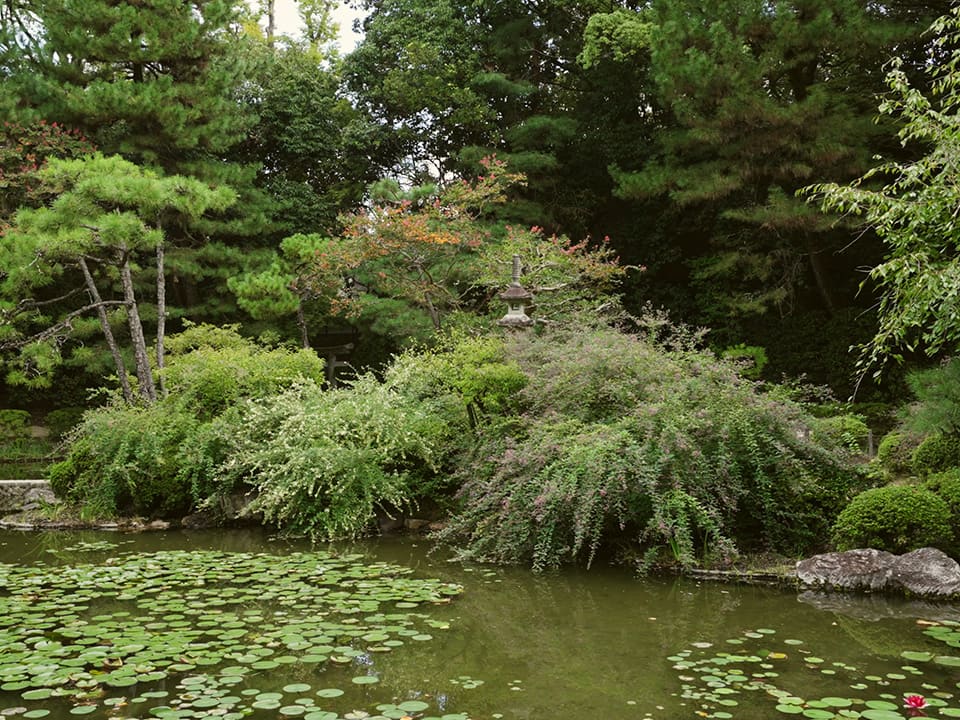
Flowers in the garden include azalea, water lily, golden lace (ominaeshi; Patrinia scabiosifolia), and rabbit-ear iris (kakitsubata; Iris laevigata).
Meiji period
This era began when the shogunate fell and power was restored to the emperor. It refers to the 45-year period stretching from the Meiji Restoration in 1868 to the death of Emperor Meiji in 1912.
yellow water lilies
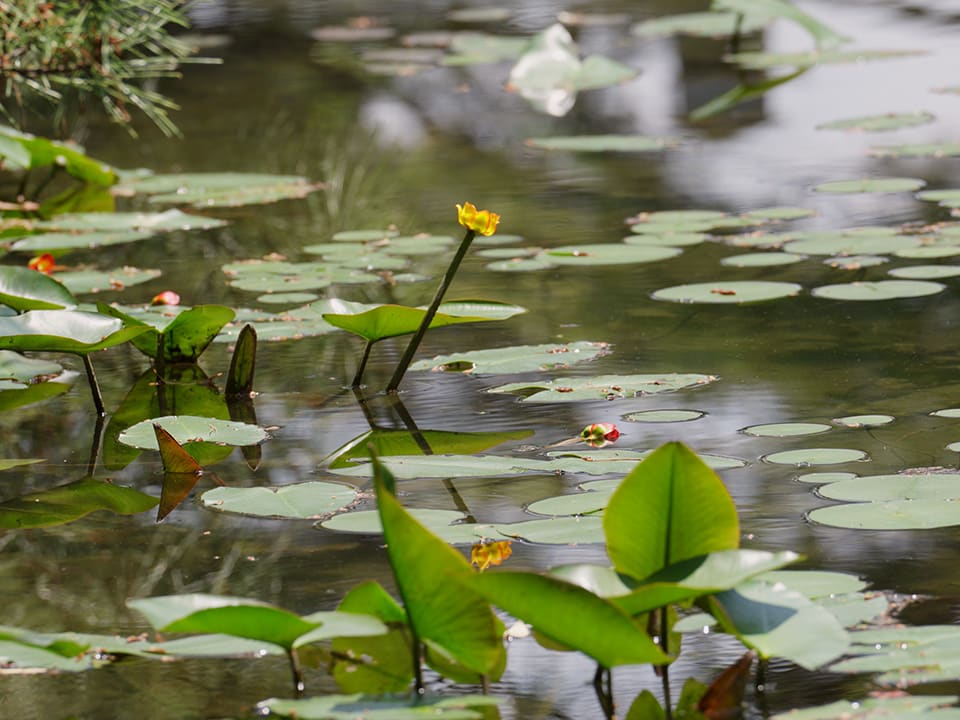
water lilies
kakitsubata irises
Emperor Kokaku
Emperor Kokaku (1771–1840) was the 119th emperor of Japan. He reigned from 1780 to 1817. He took steps to restore the Imperial Council and various Shinto rituals, and he made efforts to reassert the authority of the imperial court by engaging in activities such as relief efforts for victims affected by the Songo Incident, a period of political conflict between the imperial court and shogunate, and the devastating Great Tenmei famine.
Garyu Bridge
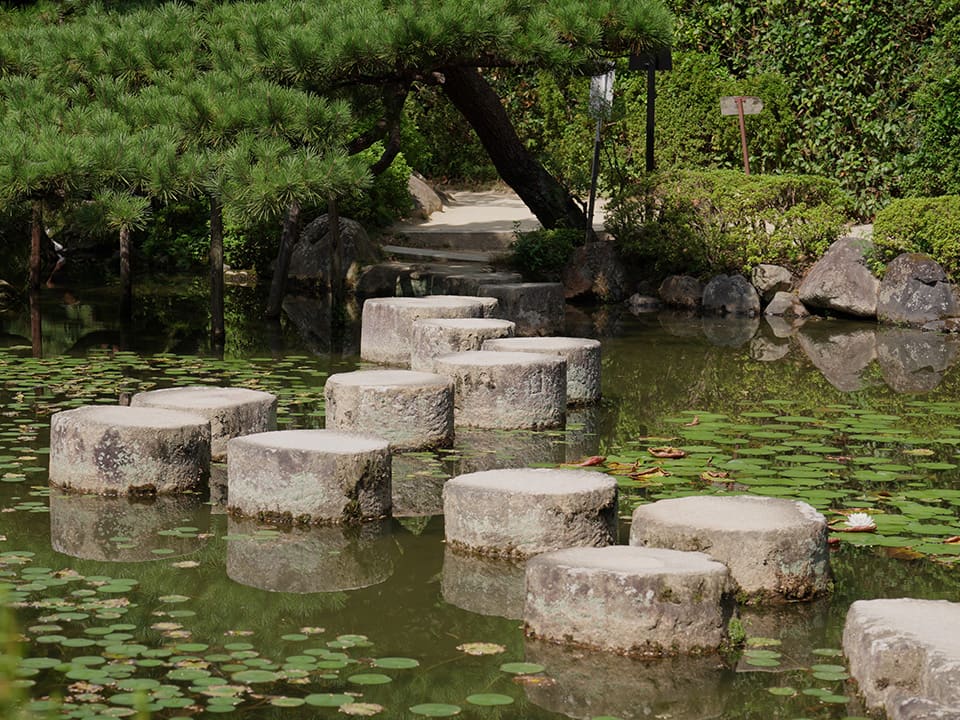
old stone pillar
Oshima Island
Blue Dragon Pond
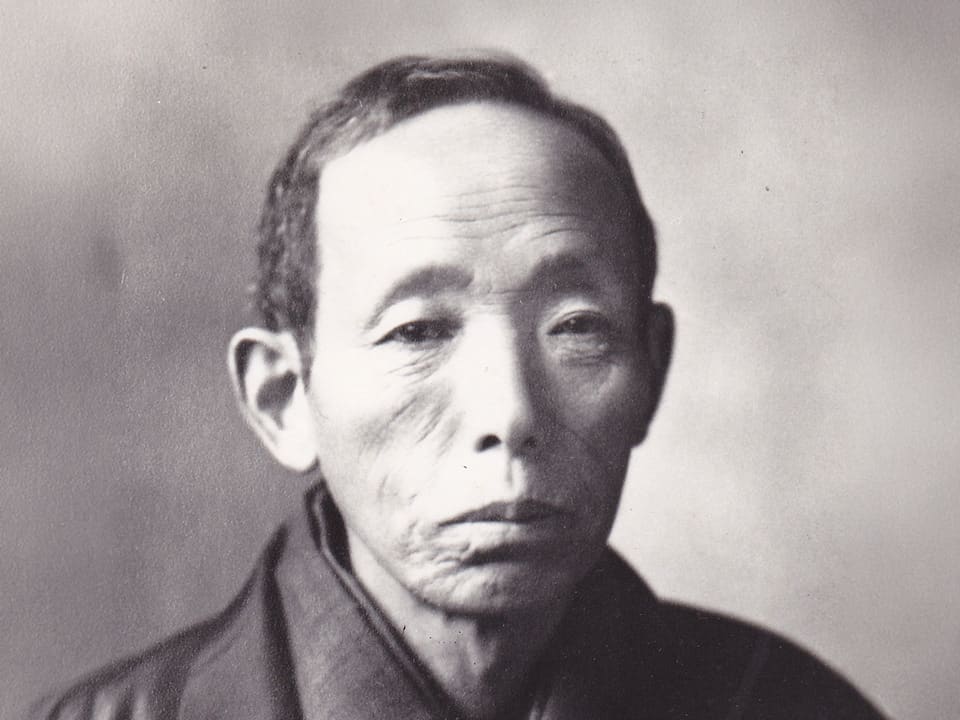
Seventh Ogawa Jihei
Ogawa Jihei VII (1860–1933), also known as Ueji, was a master gardener. Using water from Lake Biwa, he designed several impressive gardens in Kyoto’s Higashiyama area, such as the Murin’an and Heian Jingu Shrine gardens. He established the Ueji school of gardening, which fused traditional gardening techniques with modern sensibilities.
MOVIE
Experience the video to get one step closer.
This video, accompanied by narration, introduces the charms of Middle Garden (Naka Shin’en)
. Experience its charms even more deeply through the video.
Duration: (audio included)
Share on Social Media


Please respond to our questionnaire.
Estimated length: 30 seconds