Ori-zuru Irises
This article can be read in about 2 minutes.
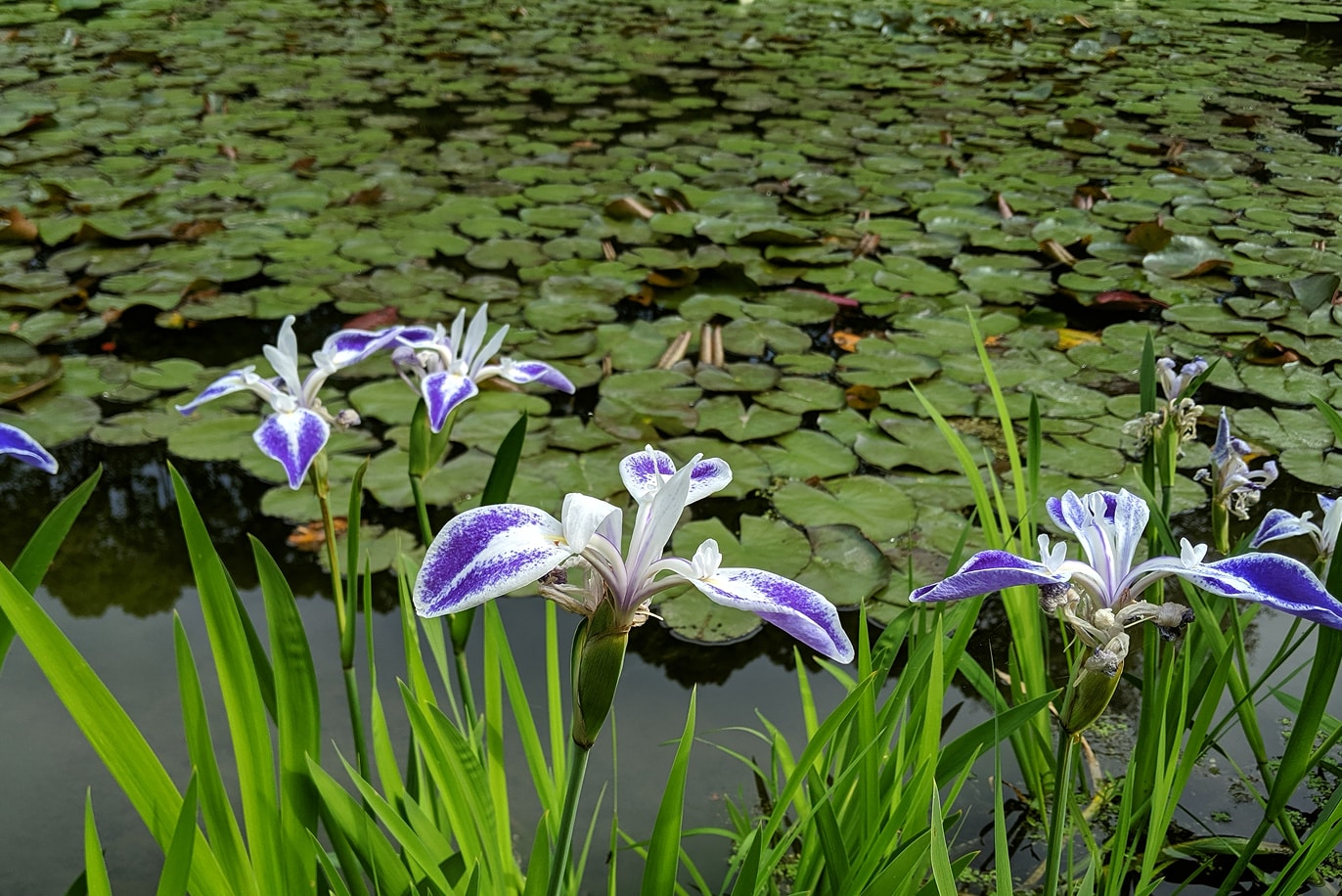
A single iris petal
reflecting Emperor Kōkaku’s heart
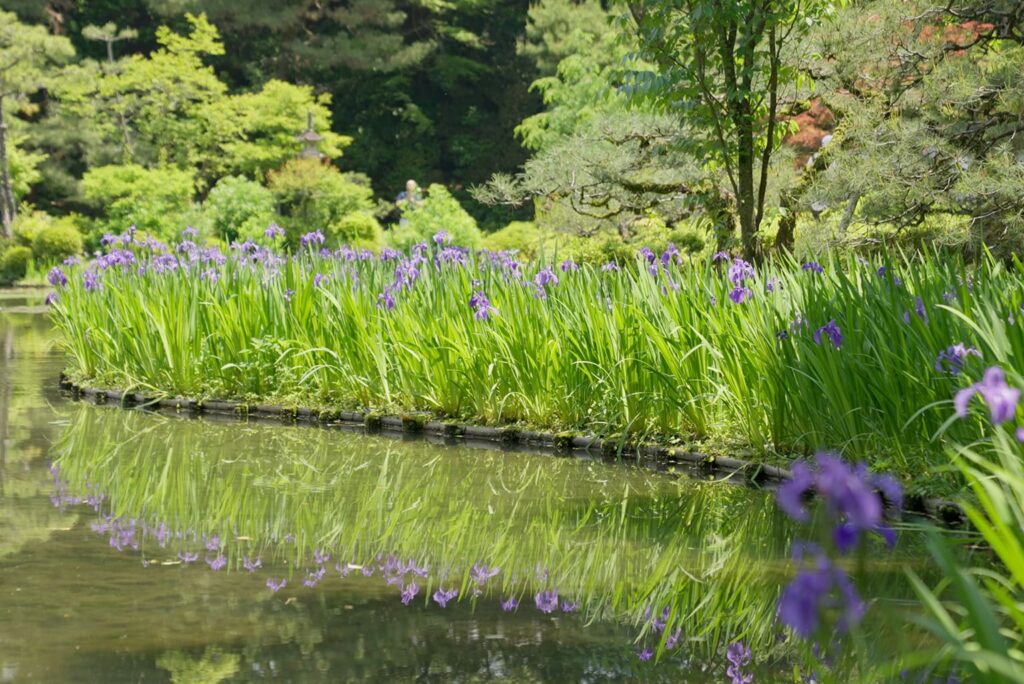
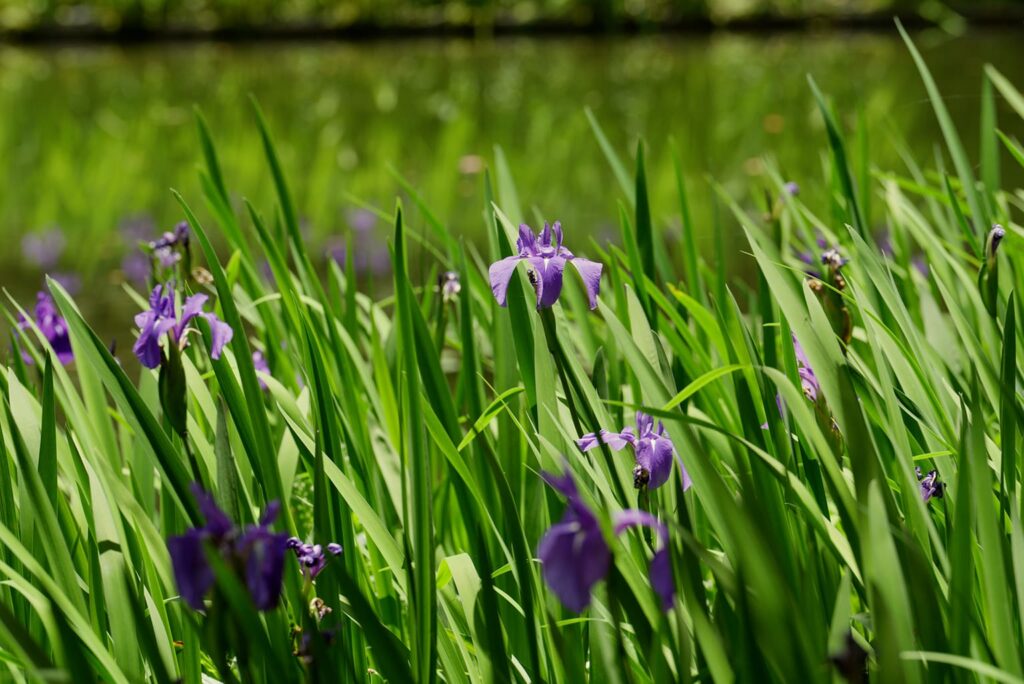
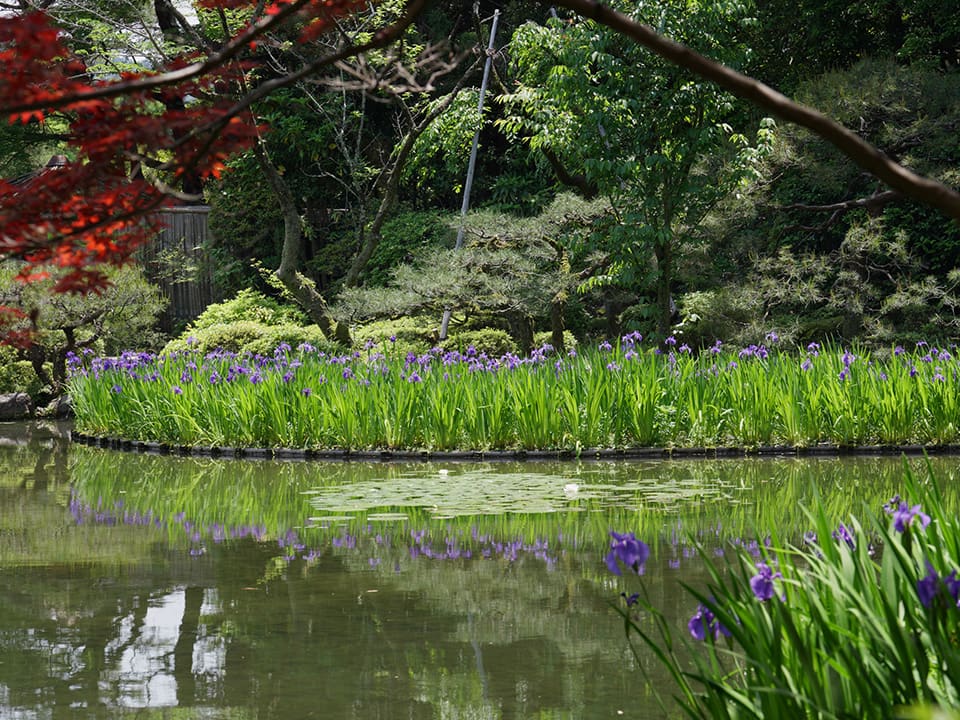
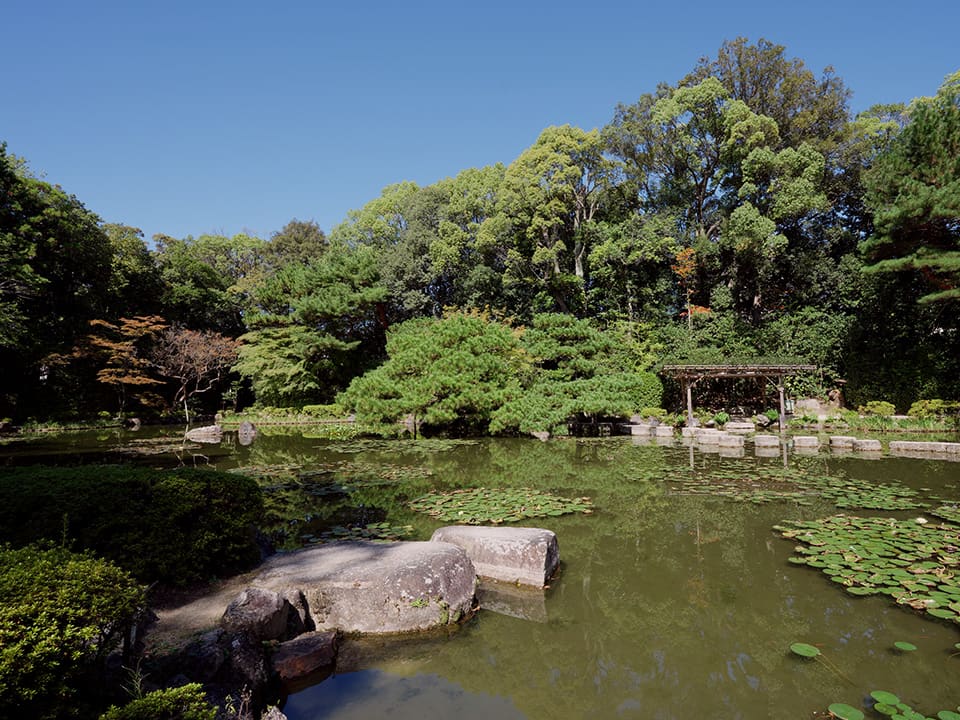
These elegant flowers, once cherished by Emperor Kokaku (1771–1840), are Japanese irises, known as kakitsubata. They bloom around the Soryu Pond in the Middle Garden. The flowers possess a unique pattern of violet on a white background and resemble paper cranes made with chiyogami paper, a traditional Japanese paper used in origami. Thus, the emperor named them ori-zuru, or “folded-crane” irises.
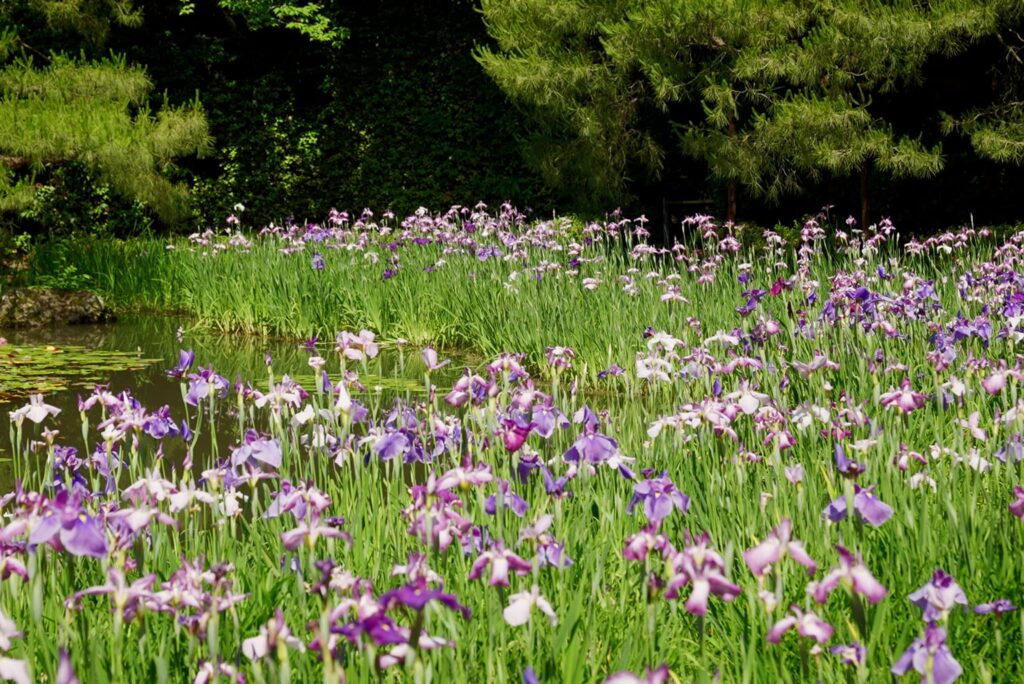
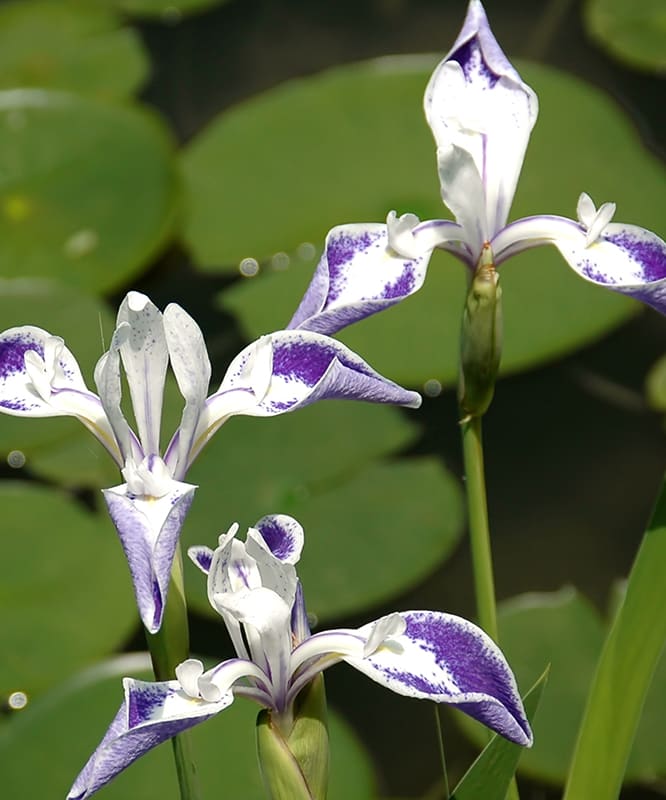
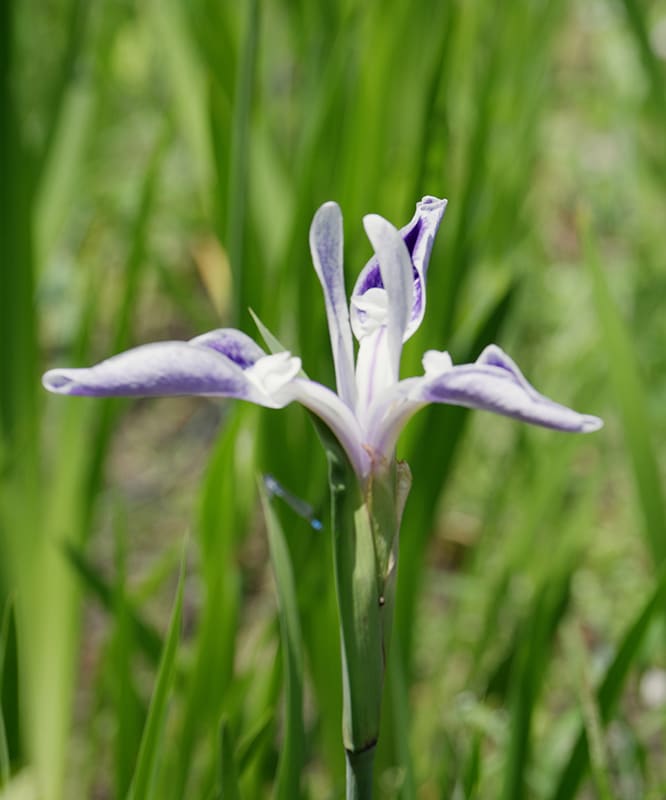
Emperor Kokaku’s favorite blossoms have survived from the late Edo period (1603–1867) and continue to delight visitors today. Nearly 1,000 Japanese irises elegantly bloom along the edges of the pond in early summer.
Edo period
The name of the period that lasted approximately 260 years from when Tokugawa Ieyasu founded the Edo shogunate in 1603 after winning the Battle of Sekigahara in 1600 until the restoration of imperial rule by Tokugawa Yoshinobu in 1867. Also called the Tokugawa period.
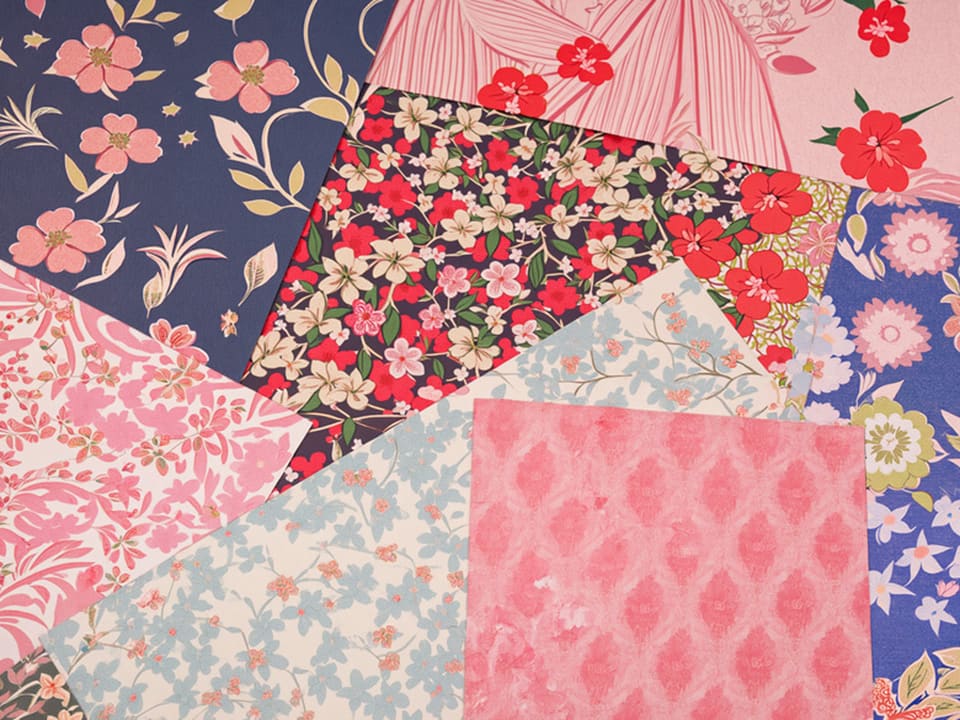
chiyogami paper
This is a type of Japanese washi paper that has been decorated with multicolored patterns using woodblock printing. It is used in origami, wrapping paper, and other crafts.
kakitsubata irises
Emperor Kokaku
Emperor Kokaku (1771–1840) was the 119th emperor of Japan. He reigned from 1780 to 1817. He took steps to restore the Imperial Council and various Shinto rituals, and he made efforts to reassert the authority of the imperial court by engaging in activities such as relief efforts for victims affected by the Songo Incident, a period of political conflict between the imperial court and shogunate, and the devastating Great Tenmei famine.
Blue Dragon Pond
MOVIE
Experience the video to get one step closer.
This video, accompanied by narration, introduces the charms of <em>Ori-zuru</em> Irises
. Experience its charms even more deeply through the video.
Duration: (audio included)
Share on Social Media


Please respond to our questionnaire.
Estimated length: 30 seconds