Taiheikaku
This article can be read in about 2 minutes.
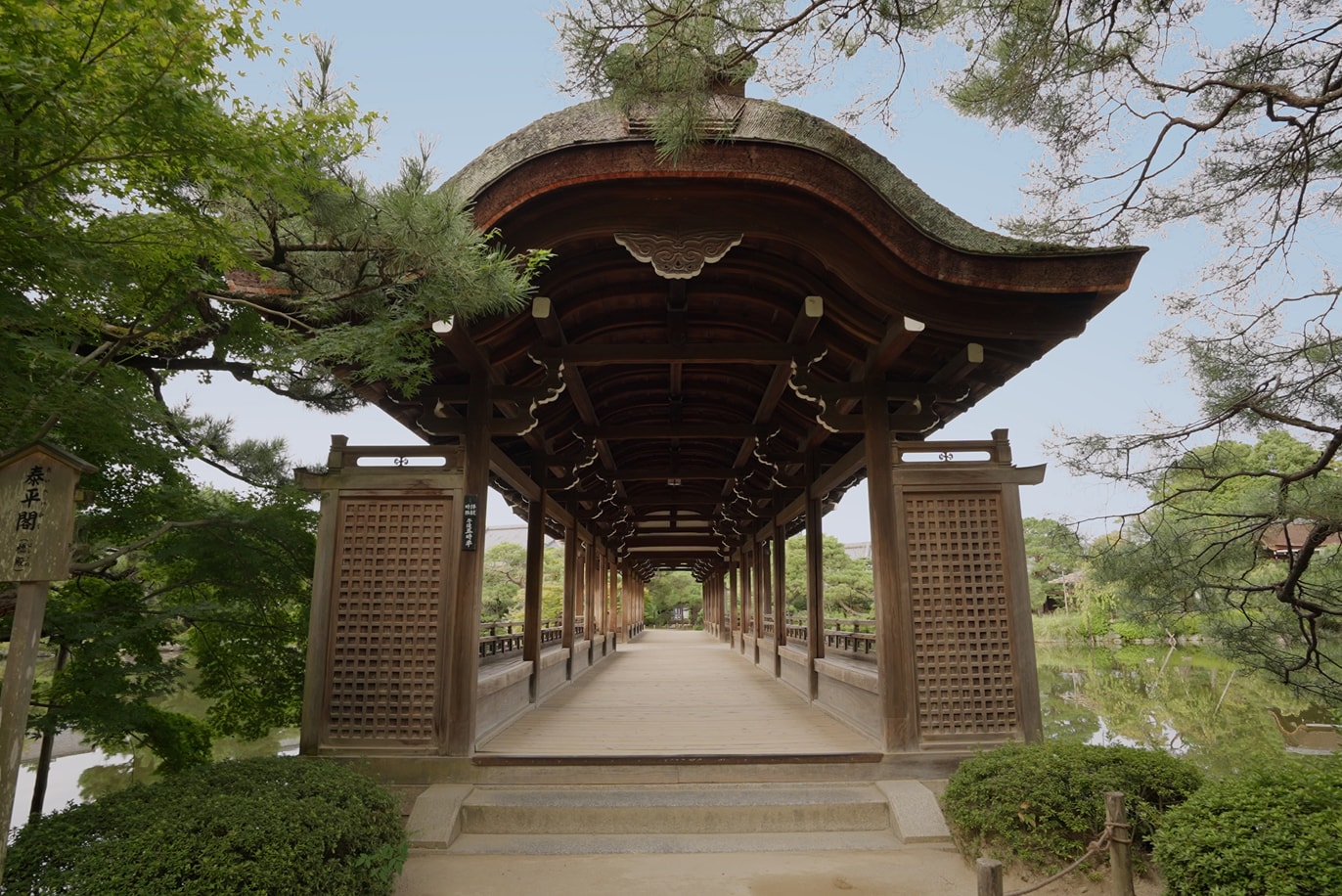
A tranquil bridge pavilion
where Japanese and Western styles harmonize
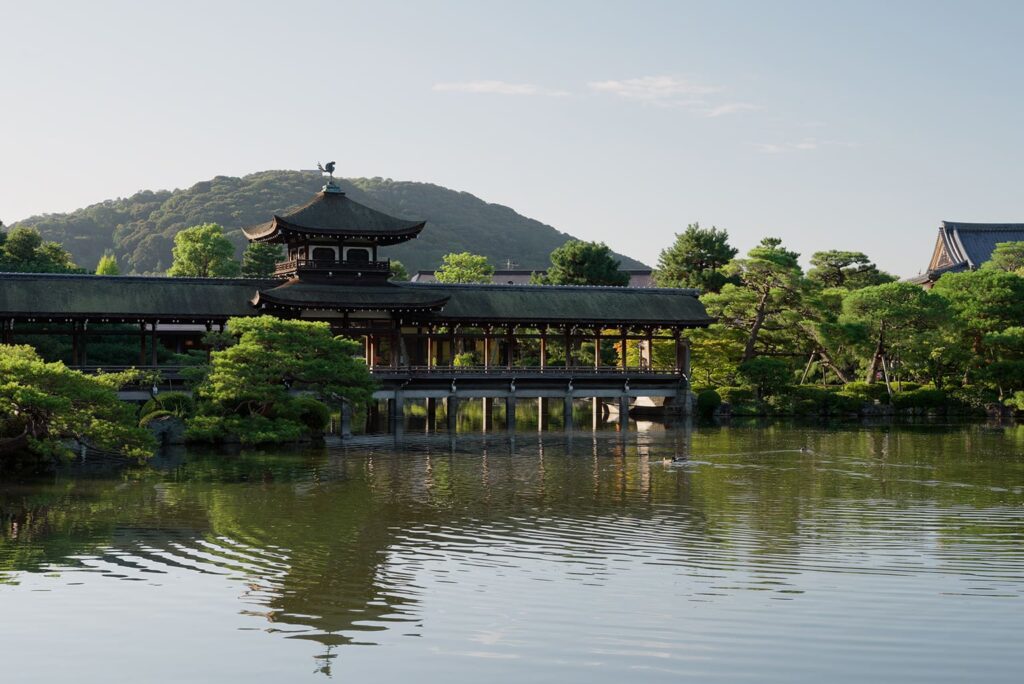
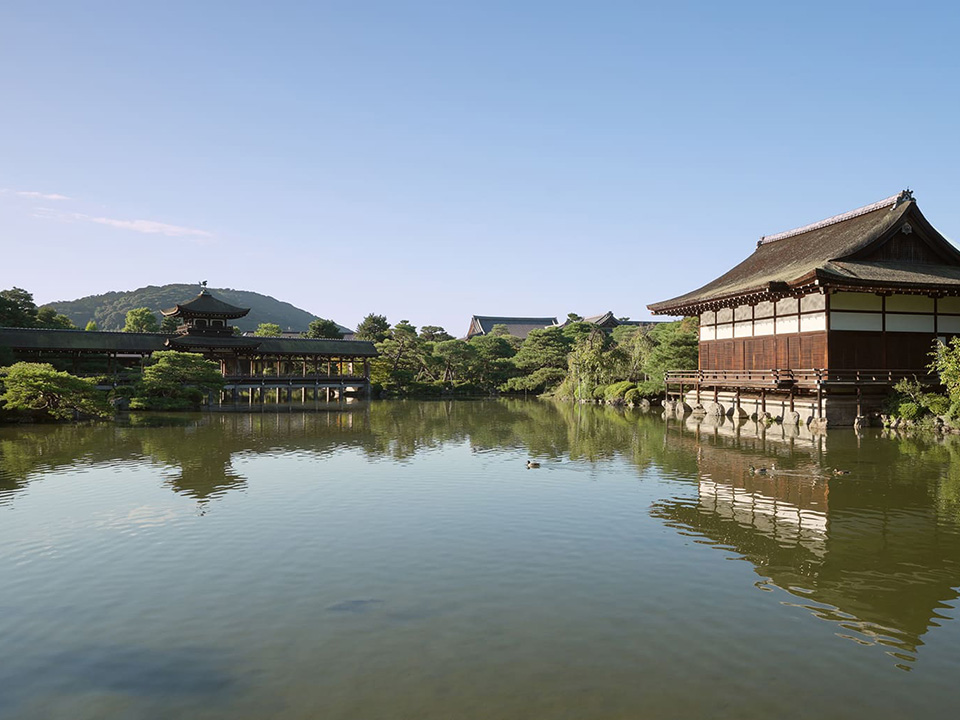
After the seat of the emperor was transferred to Tokyo in 1868, various efforts were made to revitalize the old capital of Kyoto. Expositions were held at different locations throughout the city from 1871 until the 1920s. The largest, the Fourth National Industrial Exhibition, was held in 1895 at the Kyoto Imperial Palace. Heian Jingu was founded in the same year to commemorate the 1,100th anniversary of the founding of Heiankyo (the ancient capital and one of the former names of Kyoto). In 1916, when the East Garden (Higashi Shin’en) was created, one of the exposition halls from the palace was moved to the shrine garden and named the Shobikan. Another imperial palace structure, the Taiheikaku bridge, was relocated to the garden at the same time.
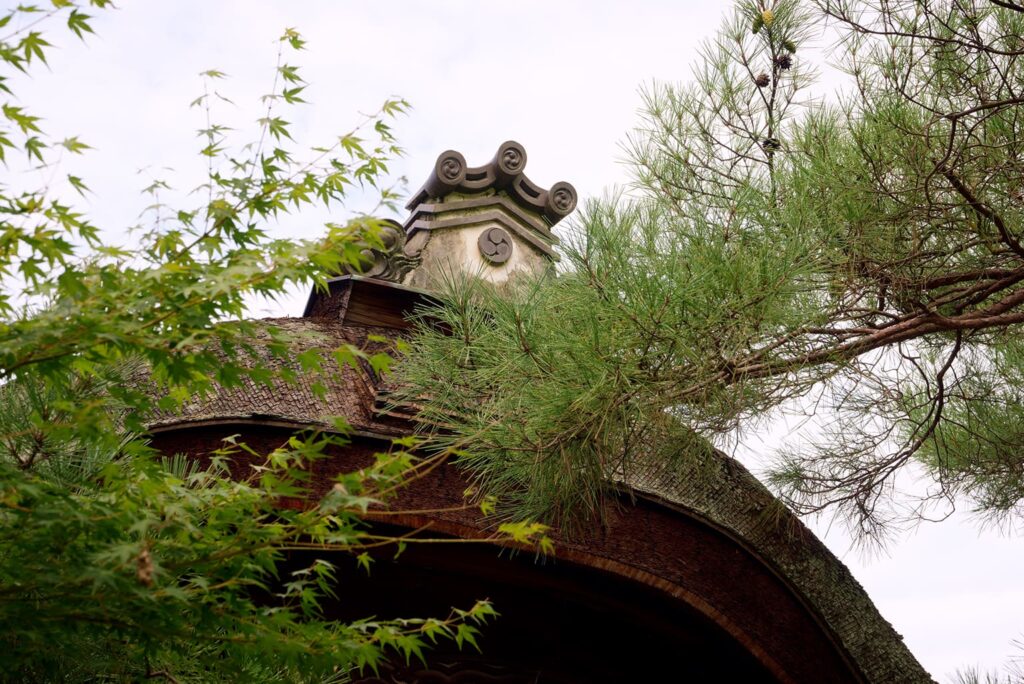
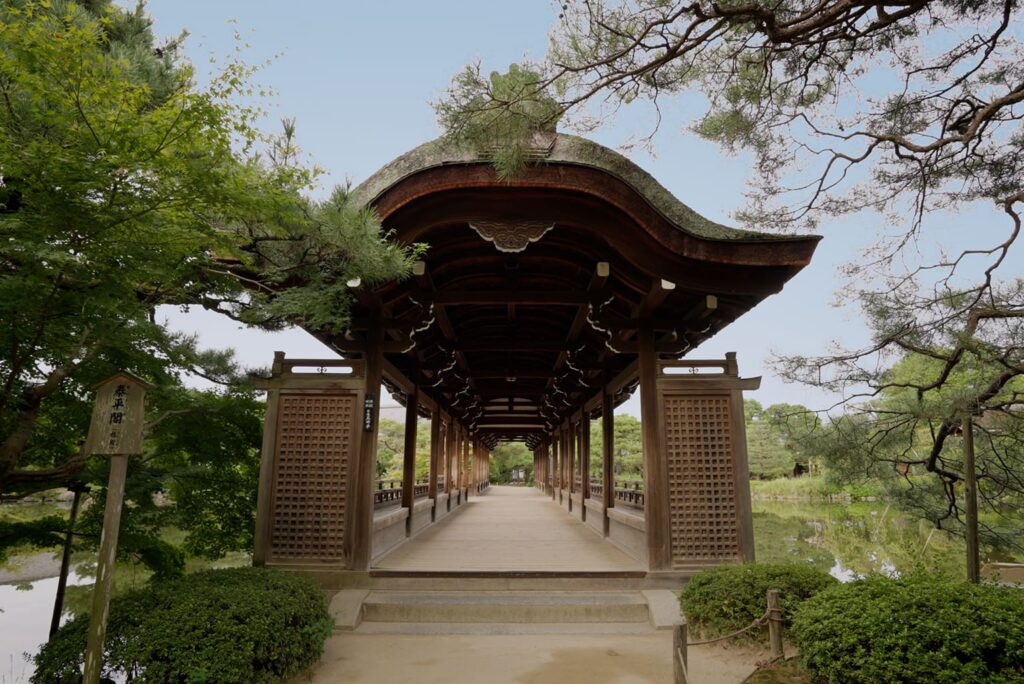
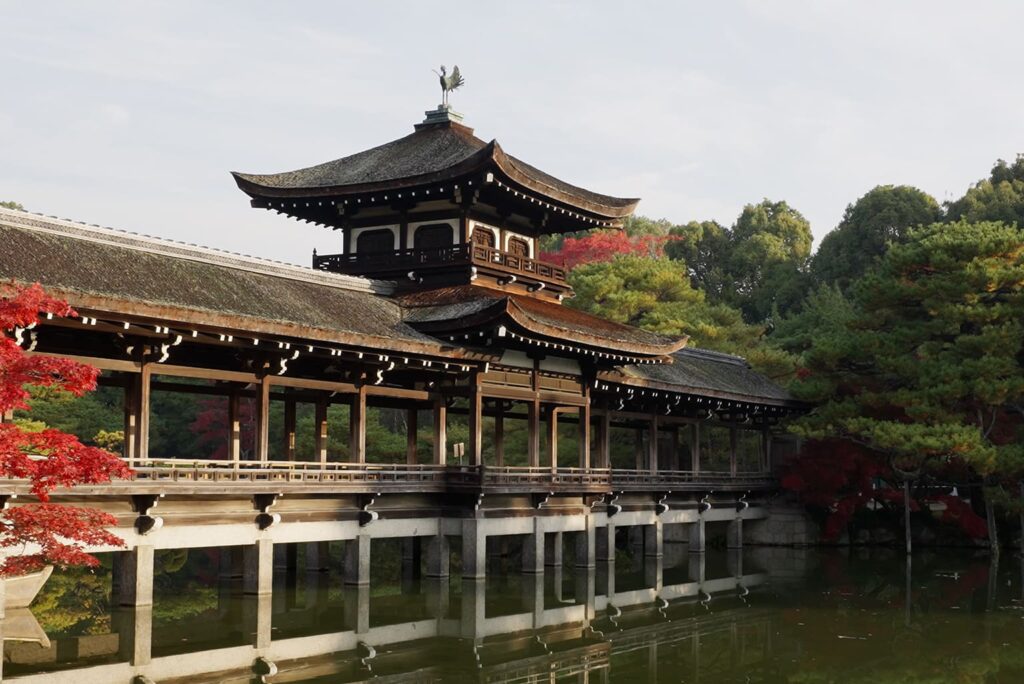
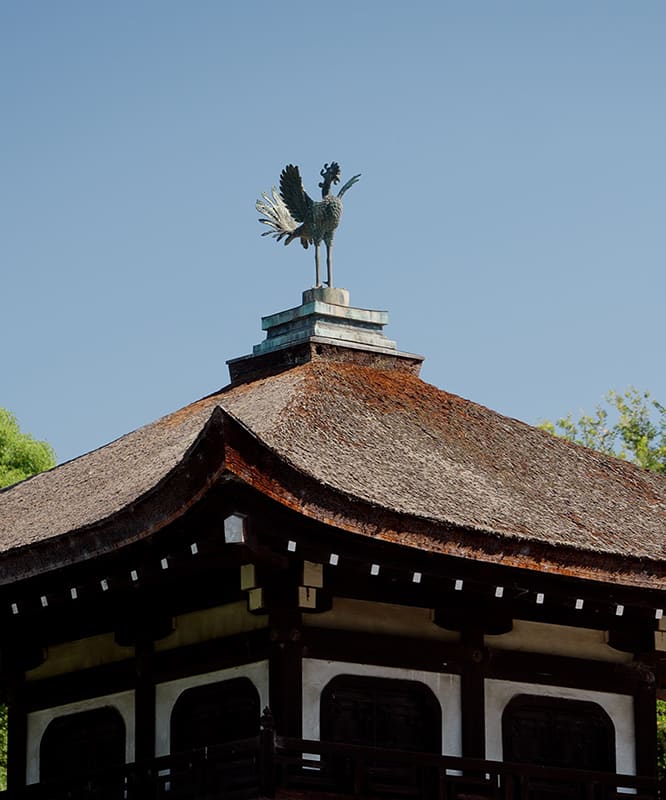
The Shobikan, which stands on the edge of the pond, is primarily decorative and is not open to the public. The Taiheikaku is a covered bridge with a two-story pavilion in the center. It has a cypress-bark roof with Chinese-style (karahafu) gables, and the center pavilion is topped by a figure of a phoenix, a symbol of virtue and grace. Wooden benches inside the bridge are provided for leisurely enjoyment of the vista of the pond and garden.
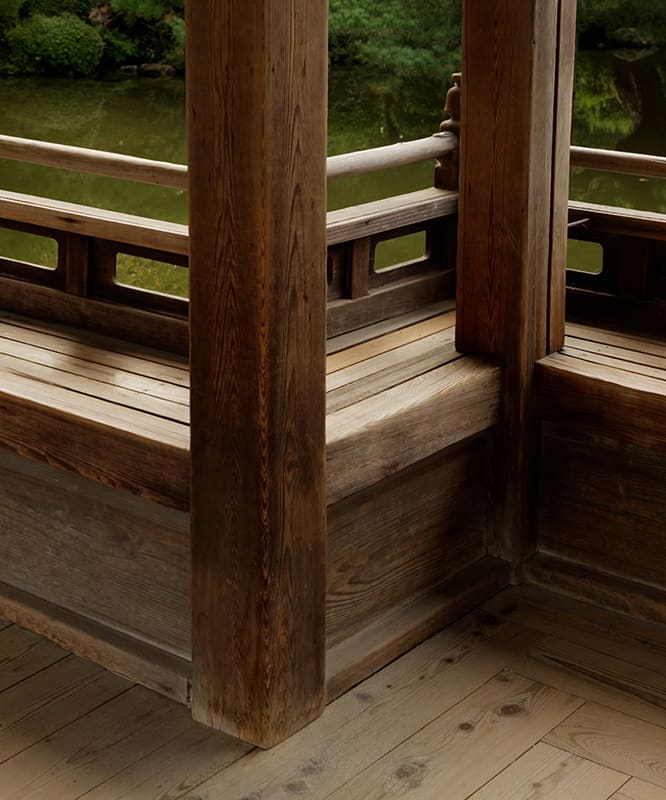
stool with handrail
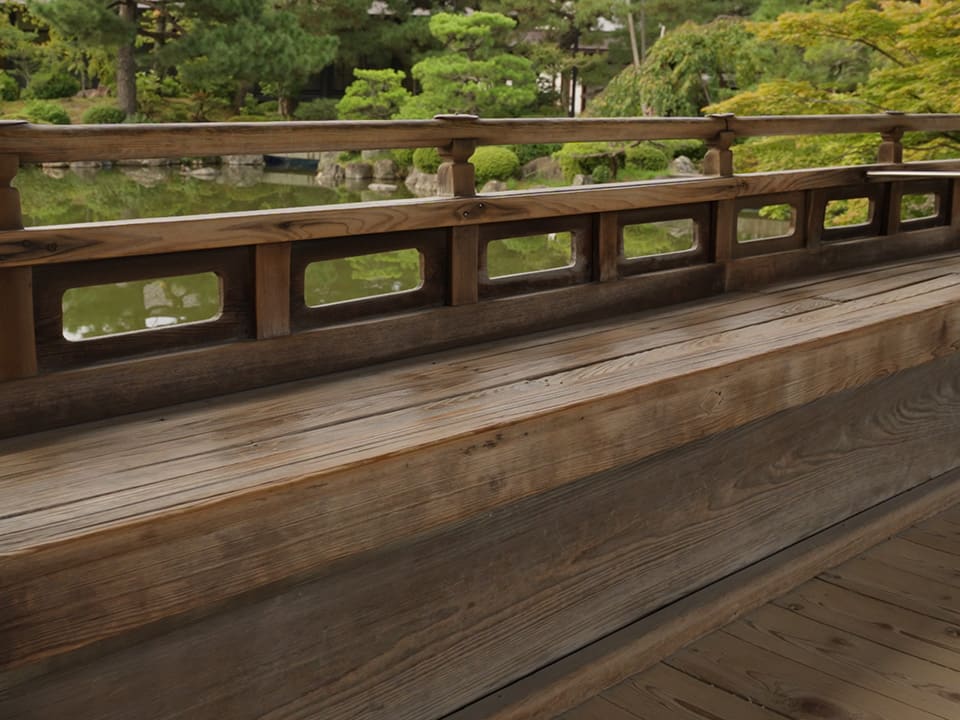
yokuro corridor
This decorative architectural structure is a set of corridors or wings that extend horizontally from a central building that make the entire structure look as though it has outspread wings. In Japan, these were built as independent straight corridors, and the north and south wings of Byodoin Temple’s Phoenix Hall are classic examples of this design. The purpose of this structure is primarily decorative, and it serves to beautify the building, complement the garden, and emphasize the building’s symmetric shape.
rokaku pavilion
This refers to a multi-storied building with a unique structure in which each story is divided by a roof. Representative examples of this type of pavilion include the Golden Pavilion (Kinkaku) at Rokuon-ji Temple, the Silver Pavilion (Ginkaku) at Jishoji Temple, and the Flying Cloud Pavilion (Hiunkaku) at Nishi Hongwanji Temple. The style can also be seen in Japanese castle keeps.
Sento Imperial Palace
This is the official residence of emperors who have abdicated the throne. It is located within the Kyoto Gyoen National Garden and was originally built as the imperial palace of Emperor Go-Mizunoo (1596–1680) at the beginning of the Edo period (1603–1867). The garden and tearoom remain today, and the site features a circular garden that makes use of the natural scenery of Higashiyama.
Gottfried Wagener
Gottfried Wagener (1831–1892) was a German chemist and technician who came to Japan during the Meiji period (1868–1912). He helped modernize Kyo and Arita pottery by working to refine ceramics, glasswork, and dying techniques. He was also quite active in education and played a large role in Japanese industrialization.
Kyoto Exhibition
First held in 1871, the Kyoto Exhibition was the first exhibition held in Japan, and it went on to be held a total of 56 times in locations such as the Kyoto Gyoen National Garden. The exhibition featured industrial, technological, and artistic exhibits and played an important role in distinguishing Kyoto as a modern city and promoting Japanese culture.
Seiho Pond
MOVIE
Experience the video to get one step closer.
This video, accompanied by narration, introduces the charms of Taiheikaku
. Experience its charms even more deeply through the video.
Duration: (audio included)
Share on Social Media


Please respond to our questionnaire.
Estimated length: 30 seconds