East Garden (Higashi Shin’en)
Late Meiji Period to the early Taisho Period
This article can be read in about 2 minutes.
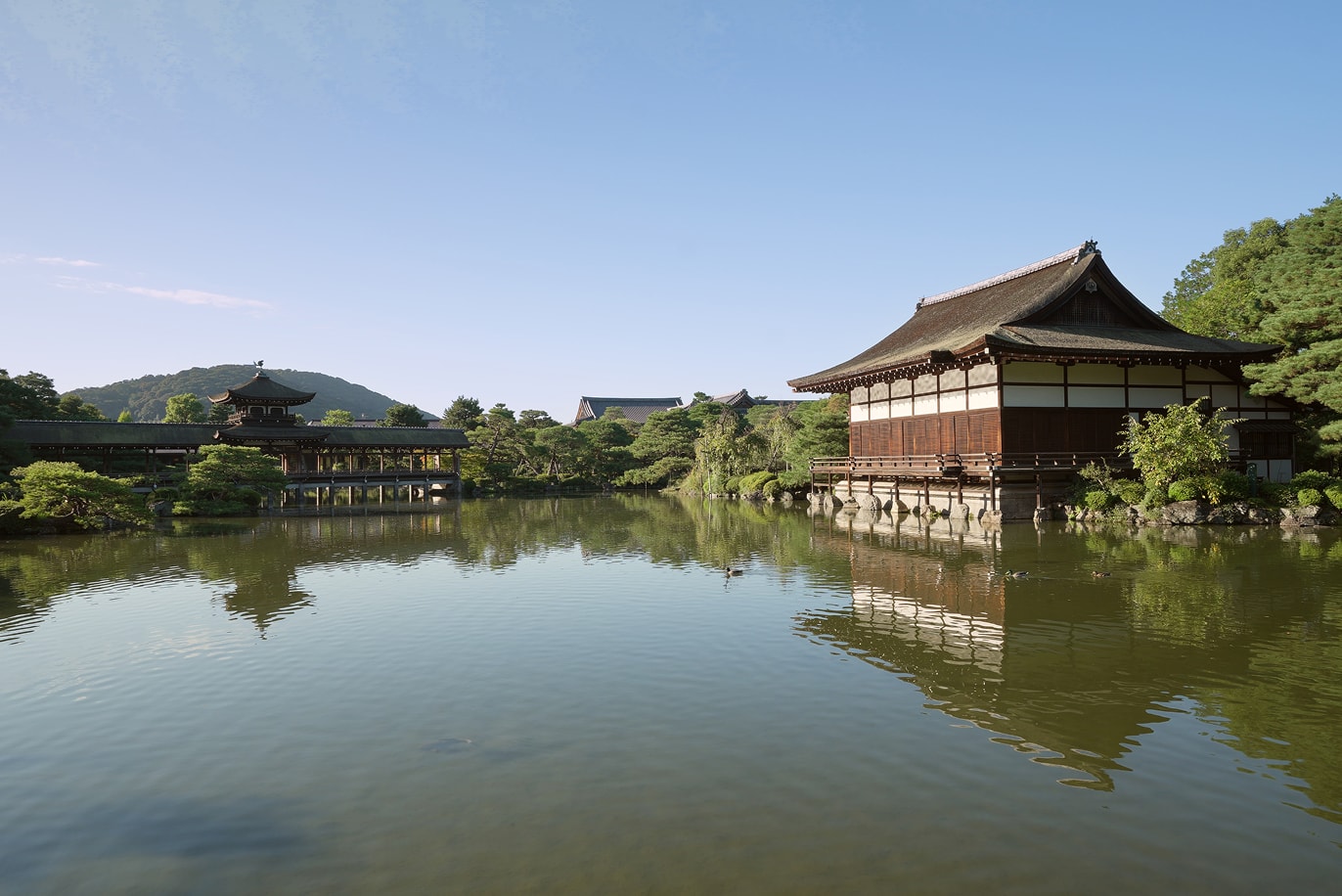
A waterside masterpiece framed
by a backdrop of weeping cherry blossoms
and the Higashiyama hills
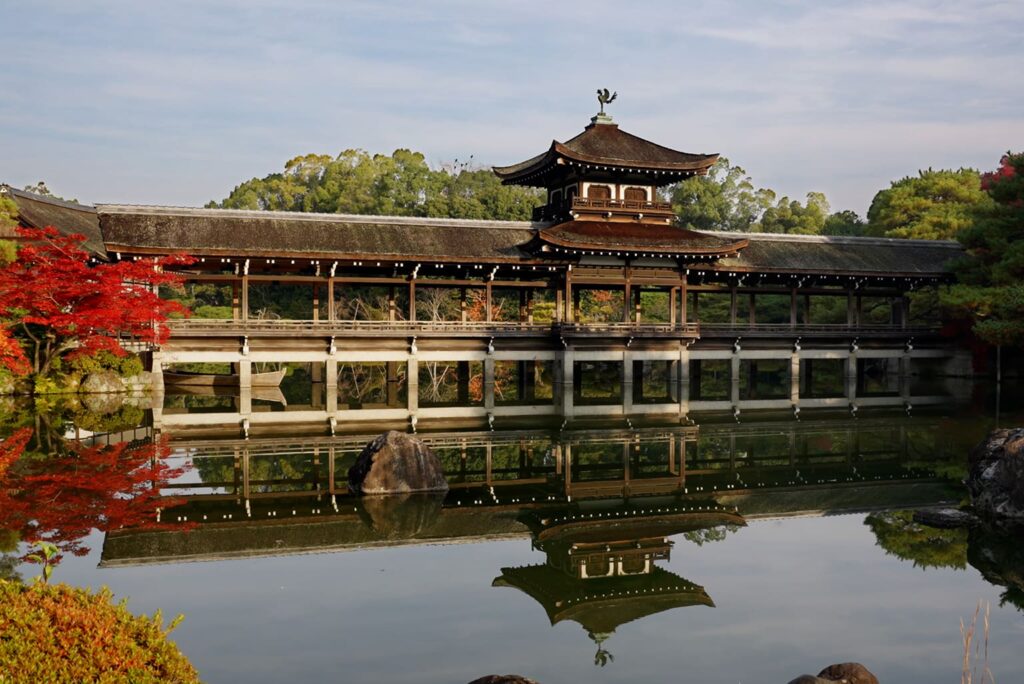
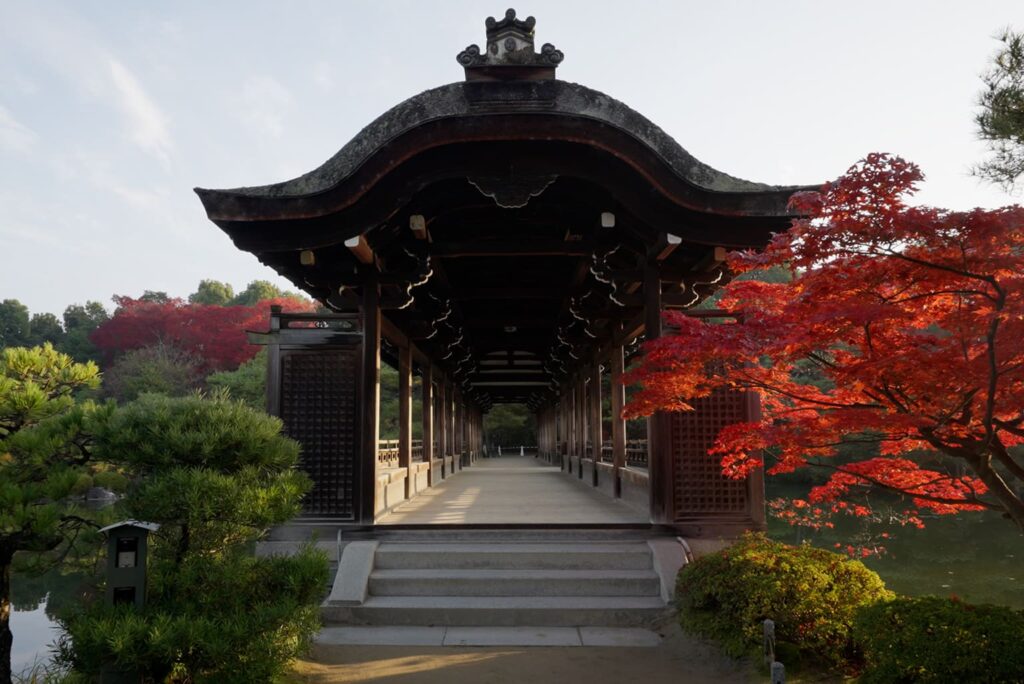
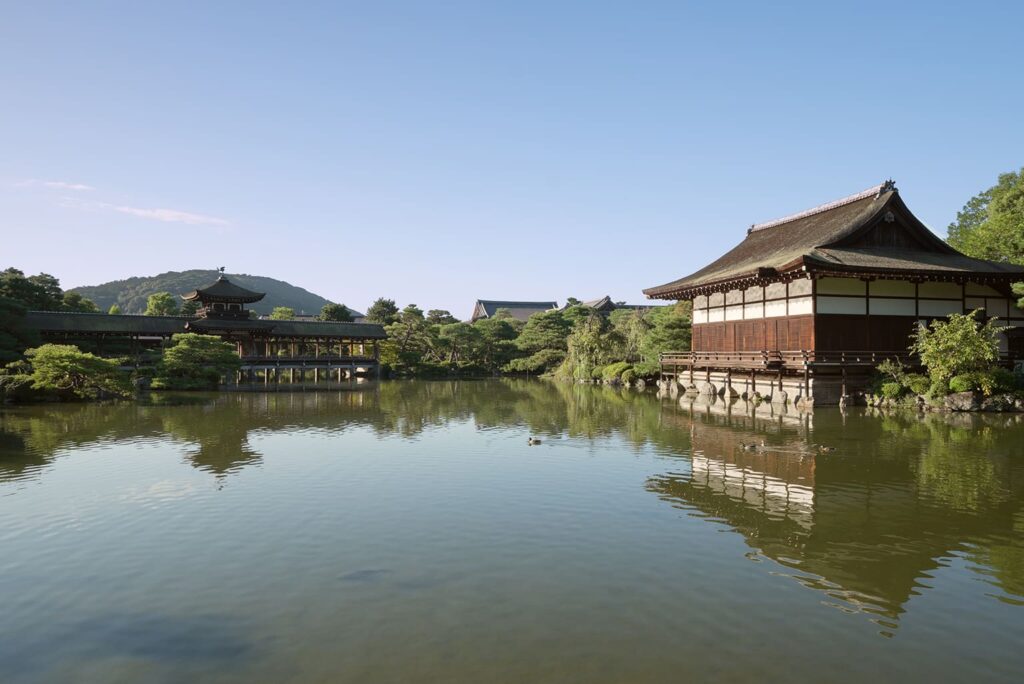
The East Garden, or Higashi Shin’en, is the third of the Heian Jingu gardens designed by Ogawa Jihei VII, master gardener of the Meiji era (1868–1912), who was known for his skillful use of rocks and water. It is the largest of the four gardens and features elegant wooden structures, such as the Taiheikaku, originally built on the grounds of the Kyoto Imperial Palace (Kyoto Gosho).
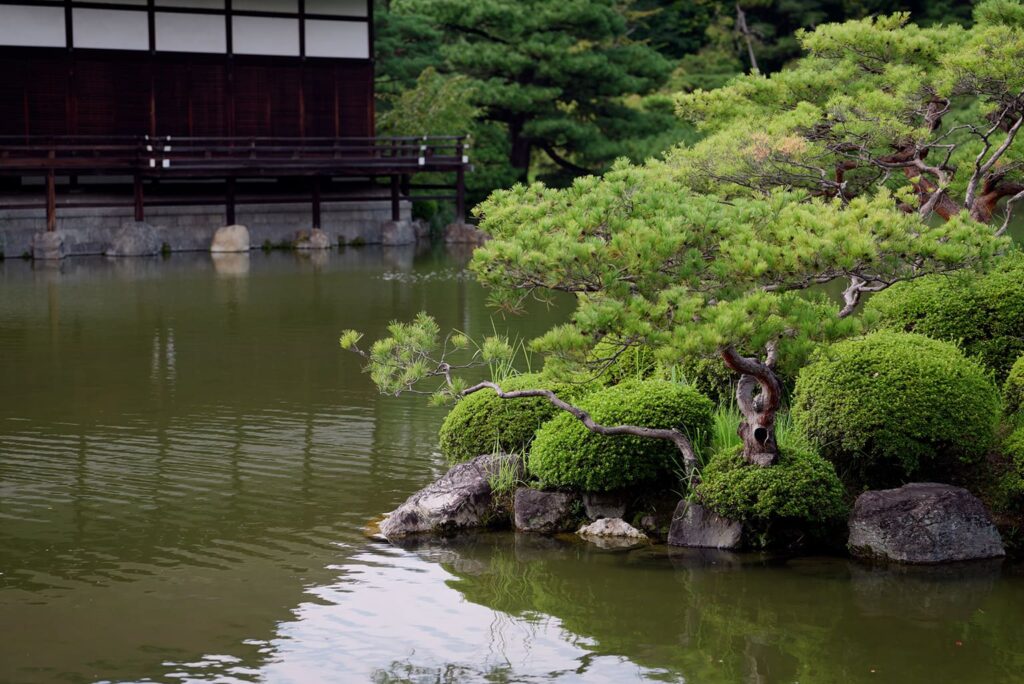
This garden is inspired by daimyo gardens of the Edo period (1603–1867). Daimyo were the lords of local domains of the Edo period, and their gardens were large in scale and incorporated teahouses and other structures from which to view the garden. The daimyo gardens were symbols of their cultural sophistication and wealth.
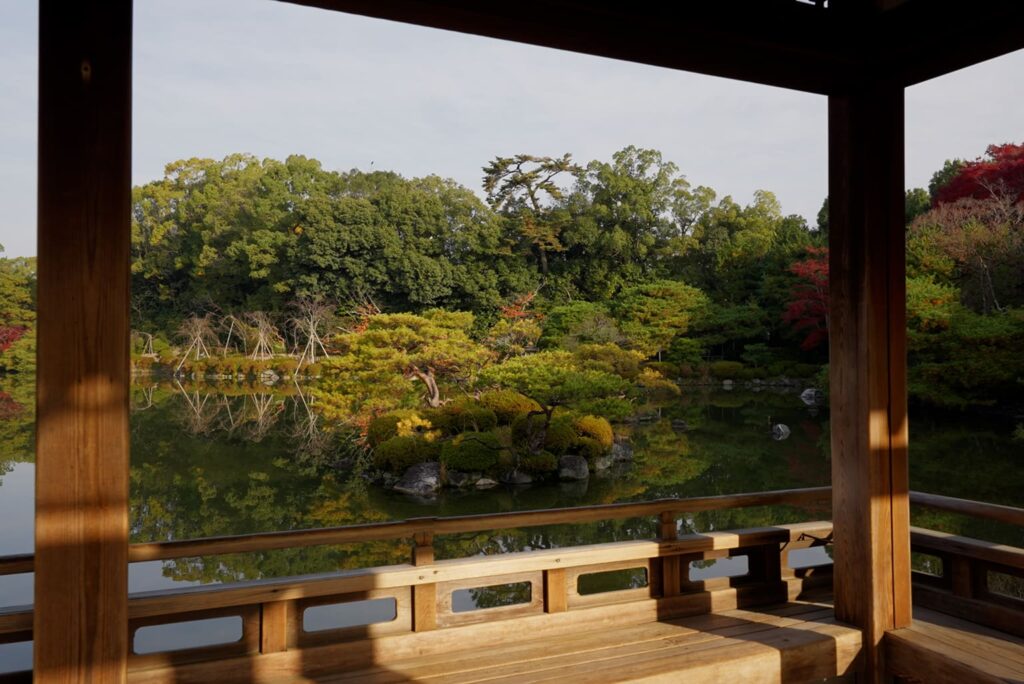
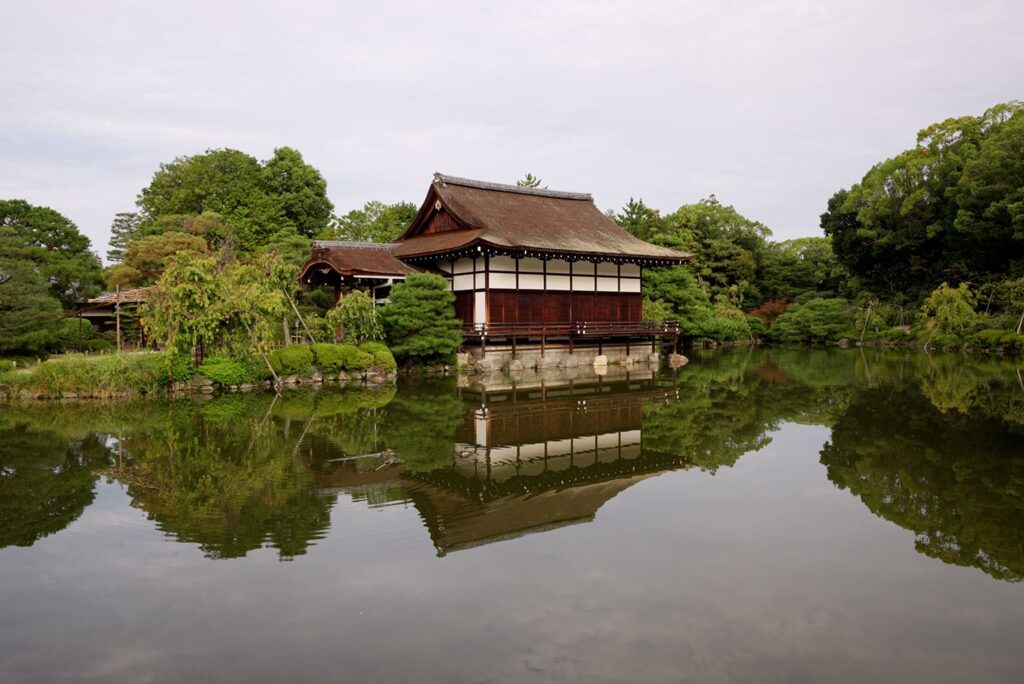
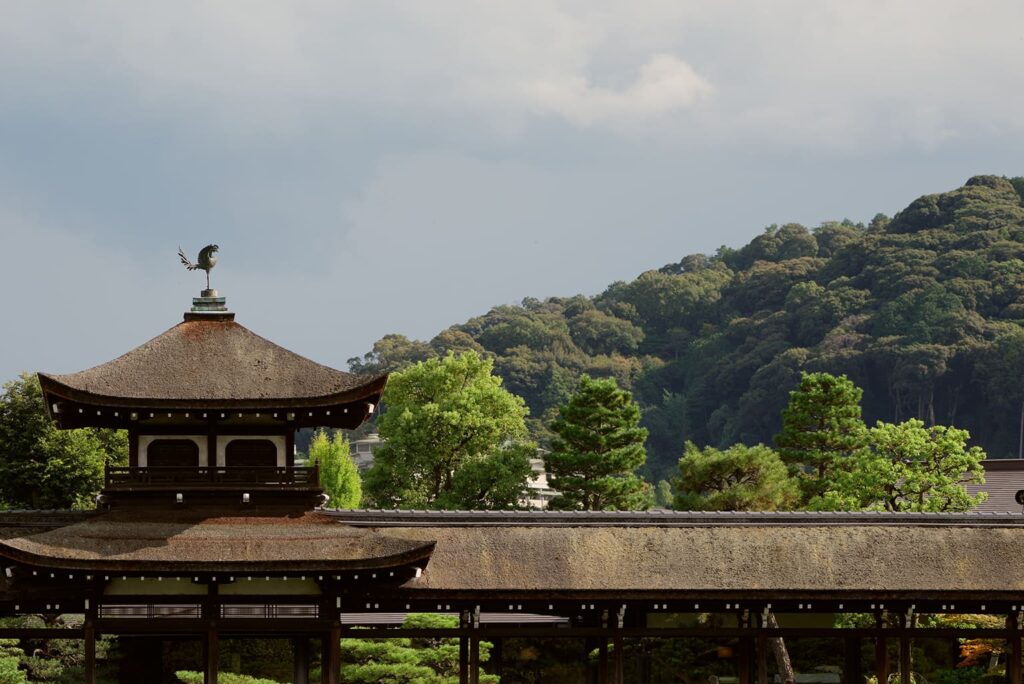
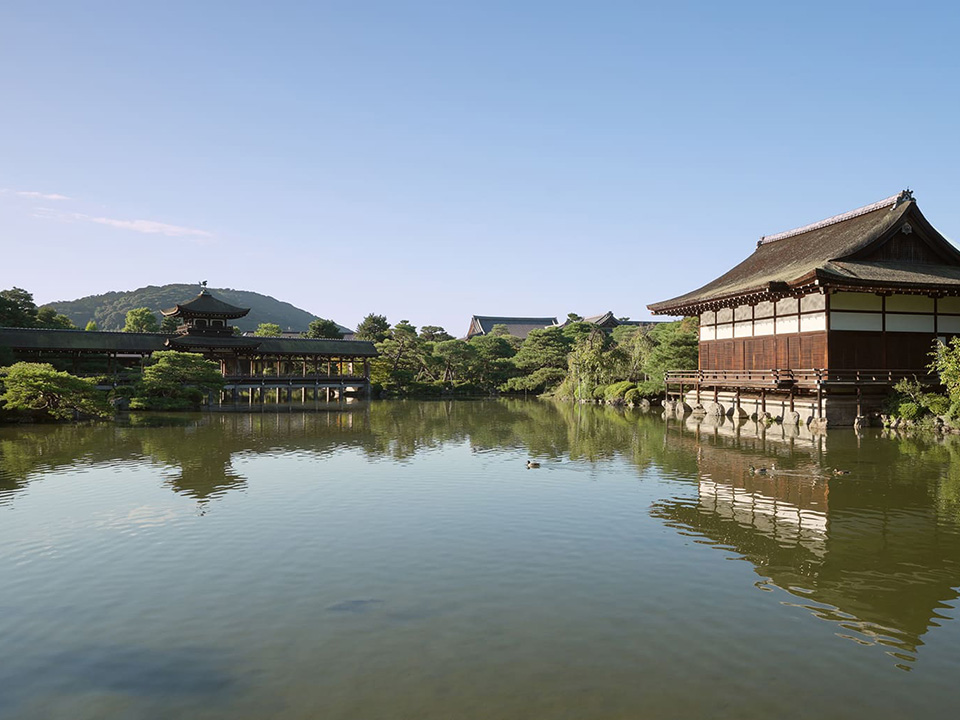
The East Garden is built around a large pond and “borrows” scenery from outside the garden to enhance the impression of scale. Beyond the Taiheikaku, the roofed walkway over the pond, is a mountain in the background. This “borrowed scenery” is one of the features of Japanese landscaping.
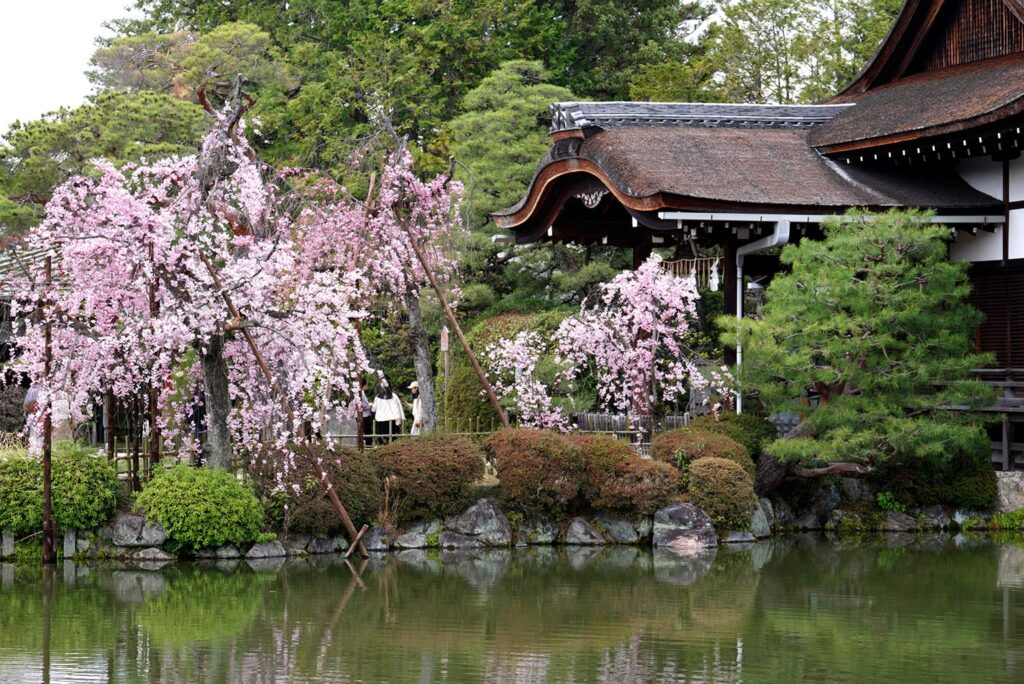
The paths around the pond are lined with cherry trees, and some double-petaled weeping cherries grow over the water’s edge. Flowers in the garden include wisteria, azalea, and the Asiatic dayflower (tsuyukusa; Commelina communis), a plant that blooms with delicate blue petals for a single day each year in July.
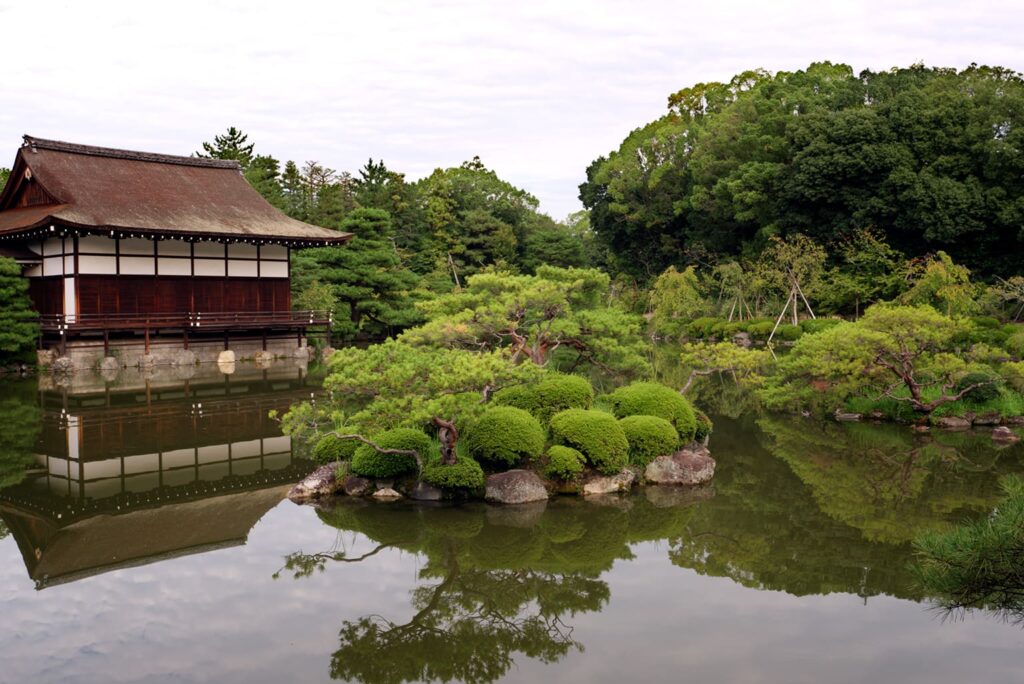
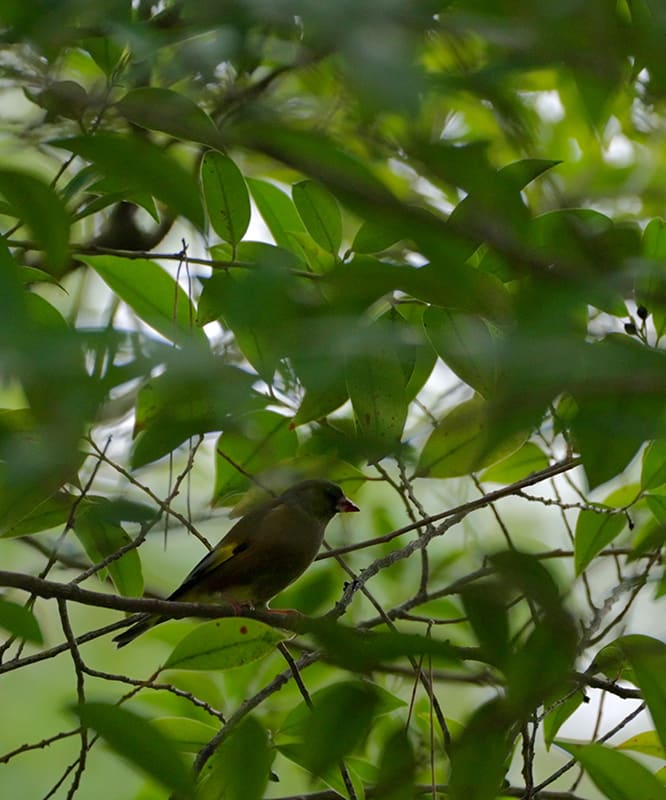
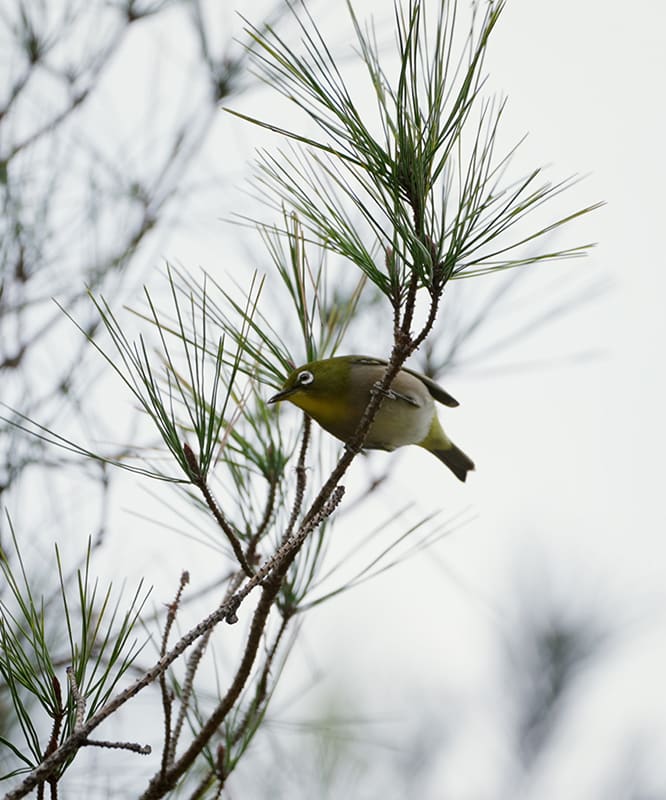
The East Garden and other gardens at Heian Jingu are popular with many types of birds, including herons, kingfishers, Japanese white-eye warblers (mejiro), and great tits.
Higashiyama
This district is located in the eastern section of the Kyoto Basin and features an array of mountains and foothills. It stretches from Mt. Hiei in the north to Mt. Inari in the south and encompasses a total of 36 mountains.
camellias
azaleas
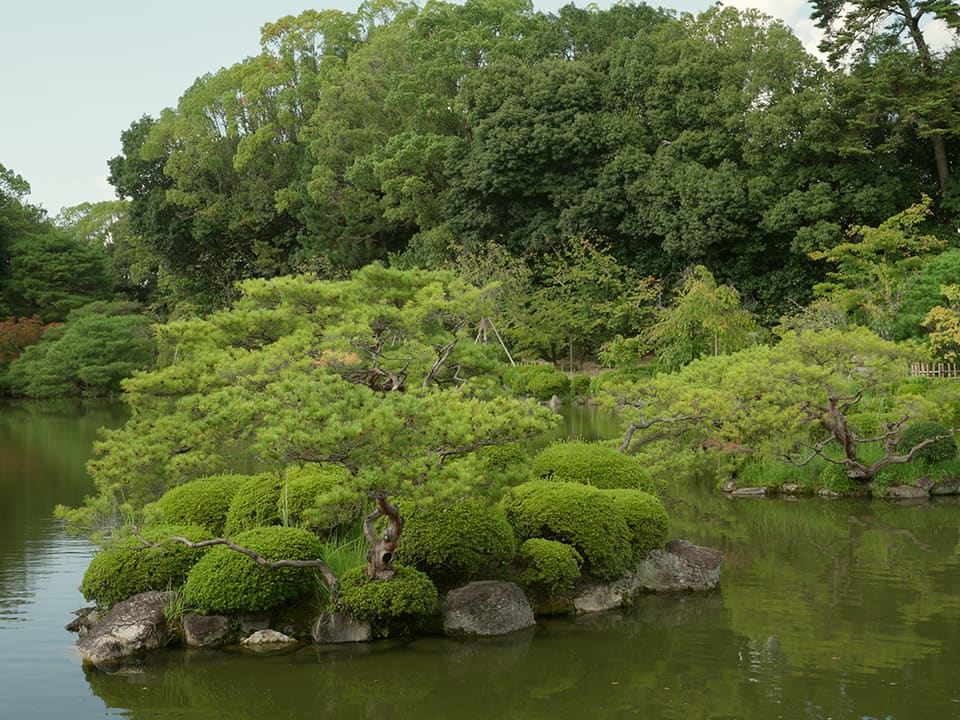
Turtle Island
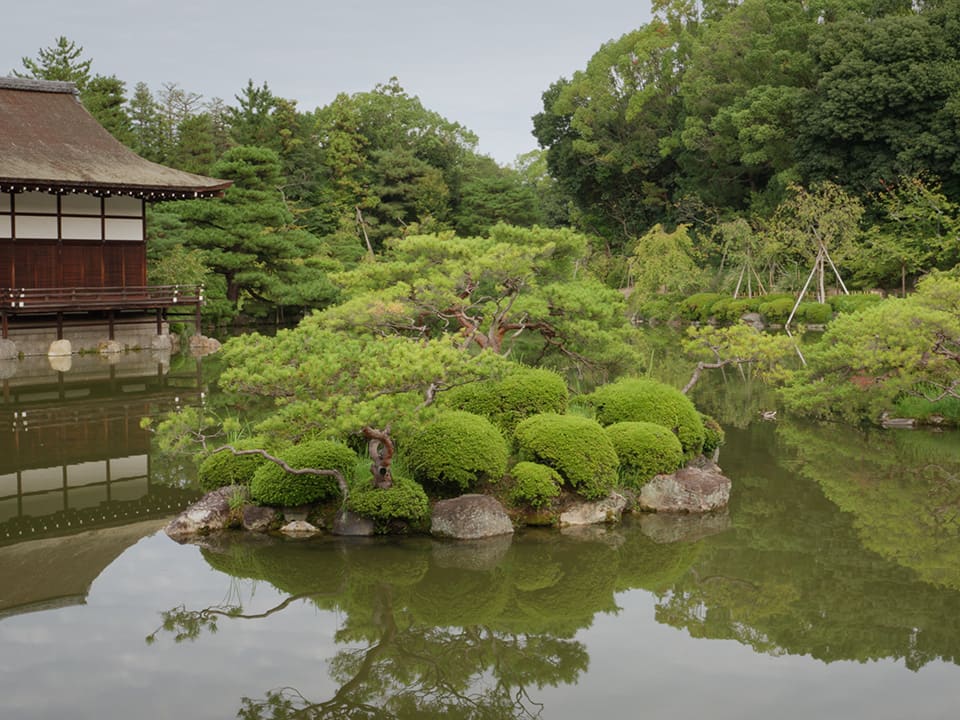
Crane Island
Seiho Pond
Taisho period
This roughly 15-year period in Japanese history stretched from Emperor Taisho’s (1879–1926) ascension to the Chrysanthemum Throne in 1912 to his death in 1926. This period saw the development of political party politics and Taisho Democracy. However, it was also an age of hardship and turmoil, with calamities such as the First World War I and the Great Kanto Earthquake of 1923.
Meiji period
This era began when the shogunate fell and power was restored to the emperor. It refers to the 45-year period stretching from the Meiji Restoration in 1868 to the death of Emperor Meiji in 1912.
Edo period
The name of the period that lasted approximately 260 years from when Tokugawa Ieyasu founded the Edo shogunate in 1603 after winning the Battle of Sekigahara in 1600 until the restoration of imperial rule by Tokugawa Yoshinobu in 1867. Also called the Tokugawa period.
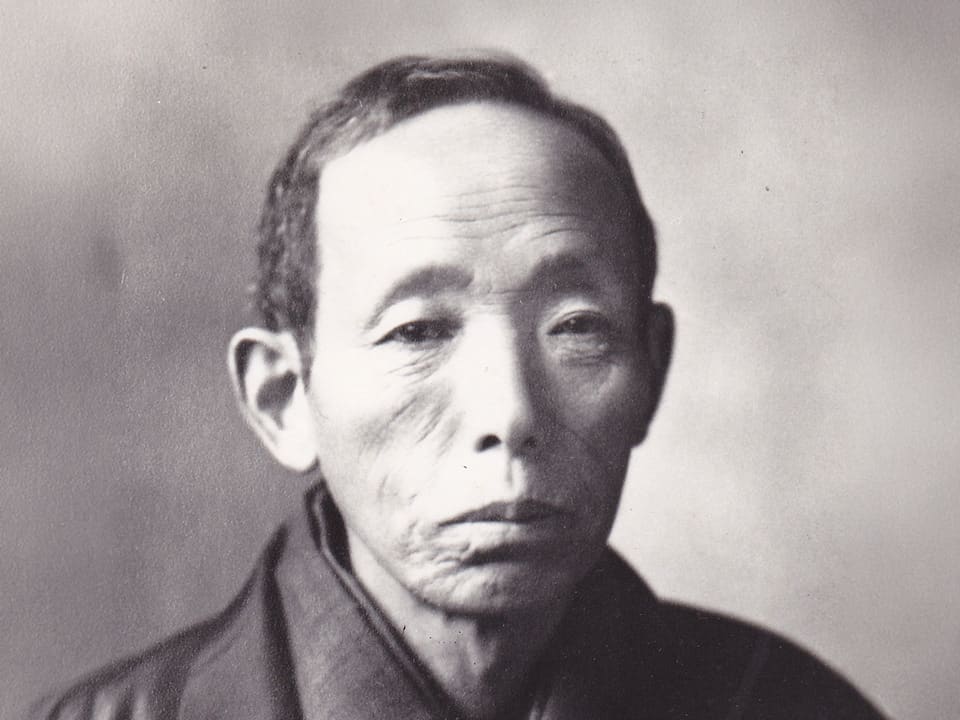
Seventh Ogawa Jihei
Ogawa Jihei VII (1860–1933), also known as Ueji, was a master gardener. Using water from Lake Biwa, he designed several impressive gardens in Kyoto’s Higashiyama area, such as the Murin’an and Heian Jingu Shrine gardens. He established the Ueji school of gardening, which fused traditional gardening techniques with modern sensibilities.
MOVIE
Experience the video to get one step closer.
This video, accompanied by narration, introduces the charms of East Garden (Higashi Shin’en)
. Experience its charms even more deeply through the video.
Duration: (audio included)
Share on Social Media


Please respond to our questionnaire.
Estimated length: 30 seconds